Savings start when you plan meals, make a list and set a firm budget so you can avoid impulse buys; compare unit prices, buy in-season or bulk when it truly saves, use coupons and store apps, and stick to your list to cut waste and lower totals.
Key Takeaways:
- Plan meals and shop with a list to avoid impulse buys; batch-cook and freeze portions to stretch ingredients and reduce waste.
- Compare unit prices and favor store brands or seasonal produce; buy staples in bulk and split perishables into smaller portions when needed.
- Use store loyalty programs, digital coupons, and cash-back apps; time purchases for sales and repurpose leftovers to maximize value.
Understanding Your Grocery Budget
Map your grocery budget to your income and household size: a practical rule is to target 10-15% of take‑home pay, which for many equals roughly $300-$800/month. If you live alone, $200-$350 may be realistic; families of four often spend $600-$900. Use these ranges to spot whether your current spending is typical or excessive, then decide whether to tighten categories like snacks or prepared meals.
Assessing Monthly Spending
Track receipts for 30 days and categorize purchases into staples, convenience, and treats using a spreadsheet or app. If you spend $600/month for three people, that’s about $6.67 per person per day, a handy benchmark. Flag any category where spending exceeds 20% of the total-takeout and impulse snacks are common culprits-and plan specific cuts to test the next month.
Setting Realistic Goals
Pick a concrete target such as cutting grocery costs by $75 or 15% in three months and choose one behavior change to start, like meal planning or switching two items to store brands. Track progress weekly and adjust tactics; small wins-saving $20/week-quickly add up to $80/month. Make goals fit your routine so you can sustain them.
Begin with a baseline month, then commit to a dollar or percent goal and three tactics-plan meals, buy bulk staples, and remove one convenience purchase per week. Use budgeting apps or envelopes and schedule a 10‑minute weekly review. In one example, a household that swapped brands and added two meatless dinners weekly cut about $150/month. Try a 2‑week pantry challenge to free up $30-$100 immediately.
Smart Shopping Tips
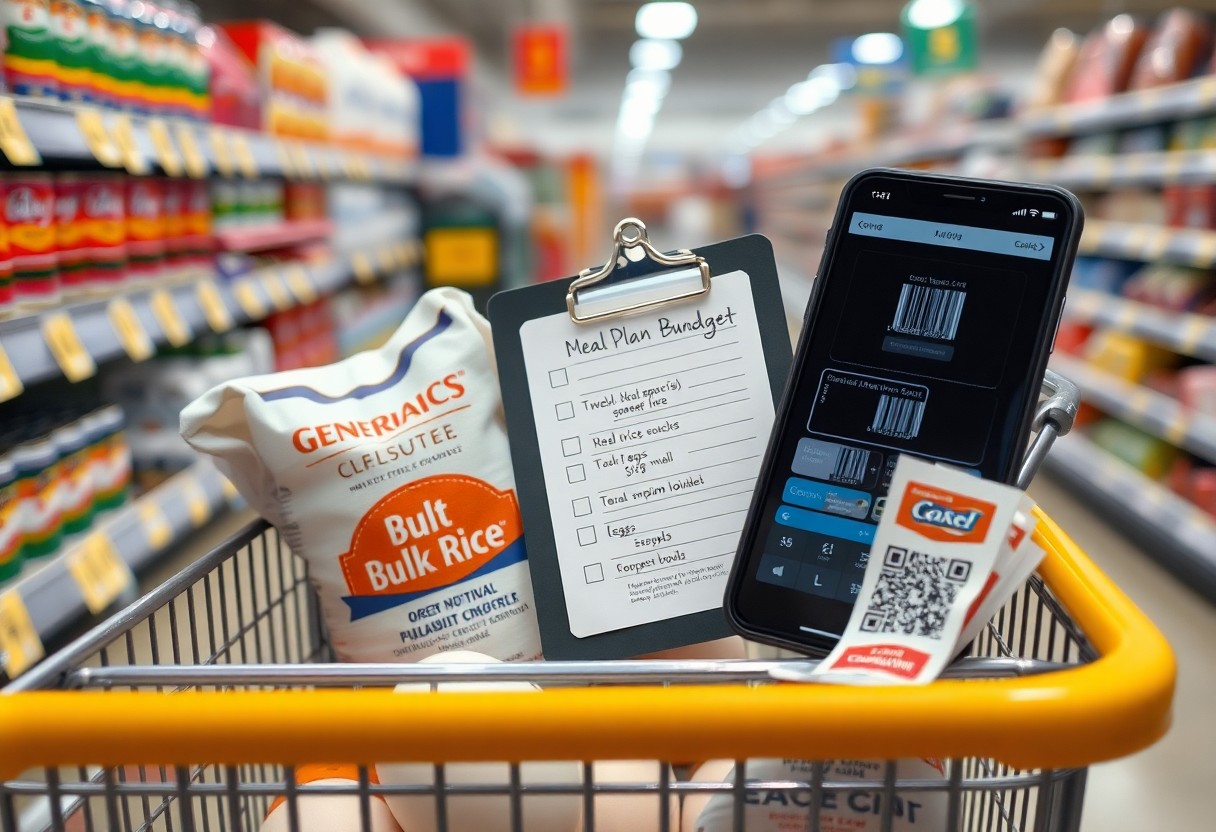
You can trim weekly food costs by combining tactics: plan meals, compare unit prices, buy store brands (often 20-30% cheaper), and favor frozen or canned produce for longer shelf life. Use cash‑back apps and watch for BOGO deals on staples you already use. Organize your cart to avoid impulse buys and set a firm spending cap at checkout. After, compare unit prices and swap expensive brands for cheaper equivalents if needed.
- save money on groceries
- budget shopping
- meal planning
Creating a Detailed Shopping List
Start by inventorying your pantry and fridge, then build a list grouped by aisle (produce, proteins, dairy, pantry, frozen) to cut shopping time. Assign quantities-e.g., 3 lb chicken, 6 apples-and plan 5-7 dinners to avoid waste. Use a phone app or a paper template to track prices and stick to needs; lists can reduce impulse purchases by about 30%. Keep one line per meal and one for staples.
Utilizing Coupons and Discounts
You should combine store loyalty offers, manufacturer coupons, and digital rebates to maximize savings: load coupons to your loyalty card, clip digital coupons in the app, and check weekly circulars for stackable deals. Target nonperishables for deeper discounts and aim for savings in the 10-50% range depending on promotions. Avoid buying items solely because a coupon exists; focus on what you already use.
Practically, clip or load coupons early in the week, scan receipts into rebate apps like Ibotta for extra cash back, and match coupons to sale items for the biggest wins. Try to stack a manufacturer coupon with a store coupon and a sale price when allowed, and always check expiration dates and coupon terms. Avoid clearance perishables past their use‑by dates and keep a quick price threshold in mind before you redeem.
Choosing the Right Stores
Prioritize stores that match how you shop: discount chains for staples, warehouse clubs for low per‑unit costs on nonperishables, and ethnic or local markets for cheaper produce and spices. Compare unit prices and loyalty discounts-private‑label items are often 20-40% cheaper than national brands. Use curated guidance like Save money on groceries: Budget tips that work in 2025 to fine‑tune which stores earn you the most consistent savings.
Comparing Prices at Different Retailers
You should track unit price (per oz./lb) across retailers, check weekly ads, and use apps that aggregate prices; price‑matching and digital coupons can shave another 5-10% off your total. Focus on a list of 10-15 items you buy regularly and compare those first to spot real savings.
Price Comparison Checklist
| What to compare | How to check |
|---|---|
| Unit price (oz./lb) | Divide price by weight; use scanner apps or shelf tags |
| Loyalty & digital coupons | Stack store offers with manufacturer coupons in apps |
| Bulk vs. single item | Compare per‑unit cost and factor spoilage risk |
| Price‑match policy | Bring evidence (ad or screenshot) to cashier |
Exploring Farmers’ Markets and Local Options
You can often find 10-30% cheaper seasonal produce at farmers’ markets, plus fresher flavor and direct sourcing. Check for posted prices, weigh items when possible, and inspect quality-some vendors don’t accept returns and produce has a shorter shelf life than supermarket items.
Arrive early for peak selection or late for bargaining on day‑end markdowns; buying 5-10 lbs of seasonal fruit to freeze can cut cost per serving by half. Consider combining small vendor buys with a CSA share or co‑op to lock in predictable weekly savings and diversify what you get from local growers.
Shop Seasonally and Locally
Benefits of Seasonal Produce
Buying produce in season usually means better flavor and lower prices; you can expect items like tomatoes in summer or apples in fall to be about 20-40% cheaper than out‑of‑season imports. You’ll also get produce picked at peak ripeness, which often lasts longer at home, reducing waste. Plan meals around what’s abundant-stone fruits, squashes, and leafy greens rotate through the year-so your weekly shopping list stretches further without sacrificing nutrition or taste.
Supporting Local Farmers
Shopping at farmers markets, farm stands, or signing a CSA lets you cut out middlemen and often find bulk or direct‑from‑farm deals that undercut supermarket unit prices by roughly 10-30%. You can compare vendors on price and quality in one visit, haggle on larger purchases, and discover seasonal bargains-like pounds of potatoes or heads of cabbage-for family meals and preserving projects.
Many local markets also run incentive programs: for example, some match SNAP/EBT dollars or offer coupons, effectively doubling benefits up to $10-$20 per visit in participating locations. Vendors will share storage tips and occasional end‑of‑day discounts, so arriving late or asking about bulk pricing can save you more; combine that with batch‑cooking to lock in real weekly savings.
Meal Planning Strategies
Plan your week by choosing 5-7 meals that reuse ingredients across recipes, build a shopping list from that plan and buy in exact quantities. Doing this can save 10-20% on grocery costs and cut food waste by up to 30%. Aim to plan dinners first, then breakfasts and lunches around leftovers; use one protein twice and one vegetable thrice to maximize value and reduce shopping frequency.
Creating Balanced Meals on a Budget
Prioritize affordable proteins like beans, lentils, eggs and canned tuna, pair them with whole grains and frozen vegetables for nutrition and shelf life. For example, a bowl of rice, black beans and roasted seasonal veg can provide 15-20g protein and cost under $1.50 per serving. Rotate colors, add herbs and citrus, and use a single roasted pan to keep meals balanced without raising your bill.
Batch Cooking and Leftover Utilization
Cook large batches-stews, casseroles or grain bowls-so you have ready meals: a 4‑quart chili can yield 8 portions to eat and freeze. To reduce food‑safety risk, refrigerate cooked food within 2 hours and cool in shallow containers. This saves evening prep time, lowers impulse takeout, and ensures consistent portion control.
Set aside 2-3 hours weekly: roast a 4‑lb chicken (about 8 servings), cook a big pot of rice, and roast root vegetables. Portion into labeled, freezer‑safe containers and use within 3 months for best quality; thaw in the fridge overnight and reheat to 165°F. Repurpose bones for broth and transform leftovers into tacos, soups or grain bowls to stretch every dollar further.
Avoiding Impulse Purchases
When you stick to a list, you protect your weekly budget-just $5 in extra items per trip adds about $260 a year. Use a strict list, shop with a basket instead of a cart, and avoid aisles not on your plan. If tempted, apply a 10‑minute rule before adding an item. Set a firm unplanned-item cap-$5-$10 per trip and track totals on your phone to stop small slips from becoming significant overspend.
Techniques to Stay Focused
Eat before shopping and schedule quick 20-40 minute trips to reduce fatigue-driven buys. You should shop with a written list, use a calculator or the notes app to run a running total, and pay with cash or a prepaid card to enforce limits. Also, block push notifications for in-app promos and avoid browsing endcaps that tempt you into nonnecessarys.
Understanding Marketing Tactics
Retailers place high-margin items at eye level and on endcaps, while checkout displays are designed to trigger last-minute buys; these placements push unplanned purchases. You should spot labels like “limited time” or “new” as urgency cues and expect loyalty coupons to steer you toward higher-margin brands. Treat shelf placement and bright packaging as intentional prompts, not bargains, and compare unit prices before assuming a deal.
To counteract these tactics, examine the unit price on the shelf, ignore endcap promotions, and use a price‑compare app to scan barcodes while you shop. Often, private‑label alternatives are about 20-30% cheaper than national brands on staples, so swap where it makes sense. If packaging sways you, wait one trip before buying-delaying decisions cuts impulse uptake of promotional cues.
Conclusion
Conclusively, you can cut grocery costs by planning meals, buying seasonal items, using store brands, and leveraging coupons and loyalty apps; prioritize bulk staples and avoid impulse buys, track prices to spot deals, and rotate your freezer to reduce waste. For actionable methods you can implement now, consult How to Save Money on Groceries to fine-tune your savings plan and stretch your food budget further.
FAQ
Q: How can I plan meals and shop smarter to save money on groceries?
A: Start by taking inventory of what you already have, then create a flexible weekly meal plan that uses those ingredients and stretches them across multiple meals. Build a shopping list organized by store section to avoid impulse buys, plan meals around store sales and seasonal produce, and pick recipes that share ingredients to reduce waste. Prepare a budgeted spend limit for each trip, cook in batches and freeze portions for quick meals, and track weekly grocery spending to spot where you can trim costs.
Q: What strategies with coupons, apps, and loyalty programs actually lower my grocery bill?
A: Use store apps and loyalty cards to access digital coupons, weekly specials, and personalized offers; combine manufacturer coupons with store deals when allowed. Add cash-back and rebate apps for extra savings, clip printed coupons selectively for high-value buys, and check weekly circulars before shopping so you buy items on sale. Enable price-matching where available, avoid buying things solely because they’re discounted, and stack savings (sale + coupon + loyalty) on items you would buy anyway.
Q: When should I buy in bulk or choose store-brand items to get the best value?
A: Buy in bulk for nonperishables and staples you use frequently-check unit prices to confirm savings-and split large packs with family or friends if you can’t use everything before it expires. Choose store brands for pantry staples and household items; many private-label products match national brands in quality and cost less. Prefer frozen or canned produce when fresh is expensive, buy seasonal produce, and invest in proper storage/freezing techniques to extend shelf life and reduce spoilage.