Groceries that fill your cart should prioritize lean proteins, whole grains, and colorful produce so you build balanced meals; you should also limit added sugars and highly processed foods and watch sodium and unhealthy fats to reduce health risks. Plan meals, choose seasonal items, stock herbs and legumes, and use the budget guide A Healthy Grocery List You Can Actually Afford to shop smart.
Key Takeaways:
- Build balanced meals from whole-food groups: lean proteins (chicken, fish, legumes), whole grains (brown rice, quinoa, oats), and a variety of fruits and vegetables for fiber, vitamins, and color.
- Stock healthy fats and pantry staples-olive oil, nuts, seeds, canned beans/tomatoes, whole-grain pasta, and low-sodium broth-to enable quick, nutritious meals and flexible meal prep.
- Shop strategically: plan meals, buy seasonal produce, prioritize the perimeter for fresh items, read labels for added sugars/sodium, and batch-cook portions to save time and reduce waste.
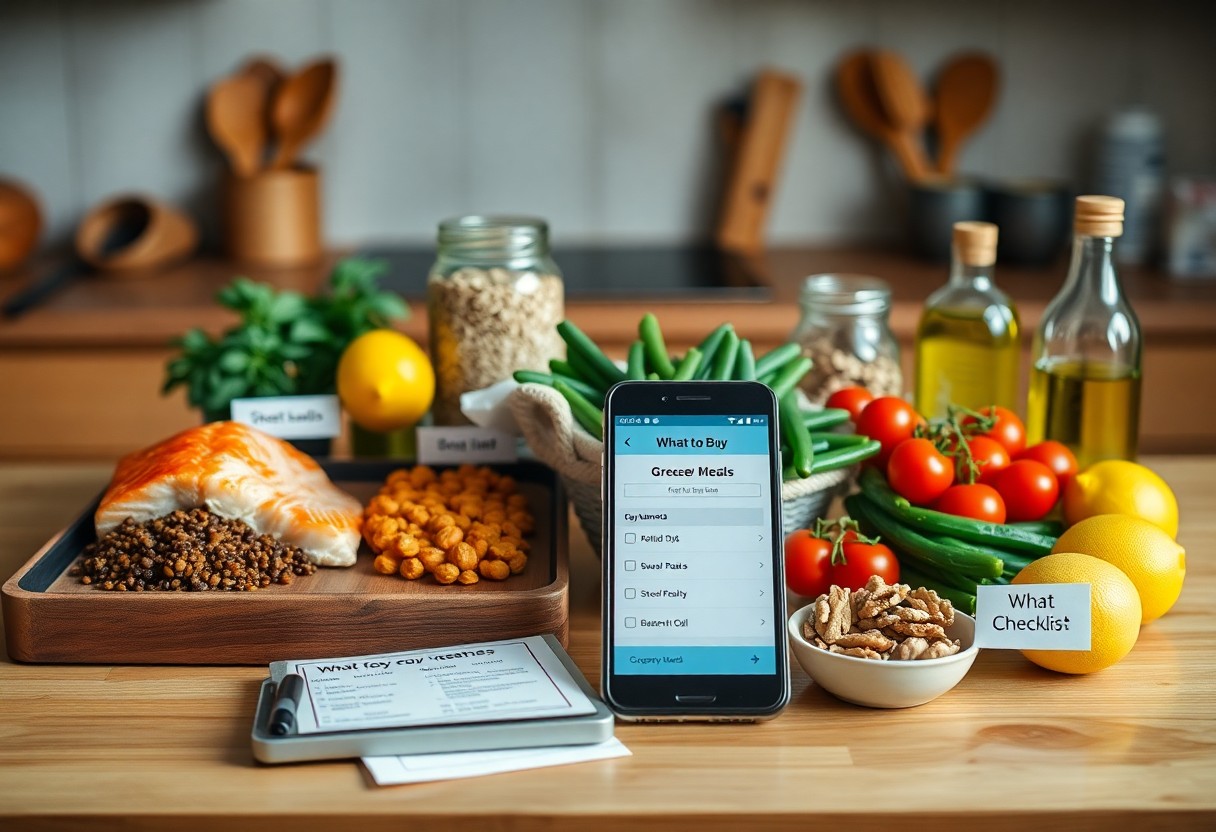
Understanding Balanced Meals
When assembling balanced meals, aim for a visual plate: half your plate non-starchy vegetables, a quarter lean protein, and a quarter whole grains or starchy veg; this structure helps you hit ~25-30 g fiber/day and steady blood sugar. Use shopping checklists like Grocery List Ideas: Health Focused Shopping Tips for specific buys, and limit ultra-processed snacks and high-sodium ready meals to reduce hidden risks.
Key Components of a Balanced Diet
You should prioritize varied proteins (fish, poultry, legumes, tofu), whole grains (quinoa, brown rice), colorful vegetables, fruit, and healthy fats (olive oil, avocados, nuts). Aim for nutrient density-25-30 g fiber/day and sources of omega‑3s-while using dairy or fortified alternatives for calcium and B12; specific choices (e.g., 3-4 oz salmon, 1 cup cooked quinoa, 2 cups leafy greens) make planning practical.
Portion Control and Meal Planning
Practice simple portion rules: your palm for protein (~3-4 oz cooked), your fist for carbs (~1 cup), and your thumb for fats (~1 tbsp or 1 oz nuts); this prevents excess calories and makes shopping measurable. You can streamline prep with portioned containers and labeled servings so your week stays consistent.
Plan 3 meals and 1-2 snacks based on your needs, batch-cook proteins and grains, then portion into 500-700 kcal containers if you’re managing weight. For example: lunch could be 4 oz grilled salmon (~26 g protein), 1/2 cup quinoa, and 2 cups mixed greens; using a kitchen scale or apps helps you track intake and maintain consistent portions for stable blood sugar and weight control.
Fresh Produce Essentials
Keep your cart full of colorful produce to hit micronutrient targets: aim for 5-9 servings daily (one serving ≈ 80 g). Prioritize seasonal and frozen options for cost and nutrient retention, and always wash produce under running water before use; discard visibly bruised items to reduce foodborne risk. You should rotate soft fruits and delicate greens quickly-pre-cut items should be used within 2-3 days to avoid spoilage.
Fruits to Include
Load up on berries, citrus, apples, bananas and avocados: berries (1 cup ≈ 4-8 g fiber) offer antioxidants, oranges supply ~70 mg vitamin C, apples add pectin fiber, bananas provide ~400 mg potassium, and half an avocado gives ~10 g healthy monounsaturated fat. You should vary types across the week to maximize polyphenols and soluble fiber for gut and heart health.
Vegetables for Nutrient Density
Choose leafy greens, cruciferous veg and brightly colored roots-spinach and kale pack vitamin K and folate, broccoli delivers sulforaphane and vitamin C, while sweet potatoes provide beta‑carotene and often exceed your daily vitamin A needs. You should include mushrooms for occasional vitamin D and peppers for carotenoids to boost overall nutrient diversity.
To get the most from vegetables, you should aim for 3-5 cups daily depending on calorie needs, favor quick cooking like steaming (3-5 minutes) to preserve water‑soluble vitamins, and keep frozen bags on hand since frozen vegetables retain nutrients comparable to fresh. Also experiment with raw salads, roasted trays for variety, and blended soups to help you consume a wider range of phytonutrients without extra effort.
Protein Sources
Aim to include 20-30 g of protein per meal by combining animal and plant options; a 3 oz (85 g) cooked chicken breast offers ~21 g, 3 oz salmon ~22 g, and 1 cup Greek yogurt ~17 g. You should favor lean, low‑sodium choices and omega‑3 rich fish, and limit highly processed deli meats that are typically loaded with sodium and nitrates.
Lean Meats and Fish
Choose skinless chicken breast, turkey breast, pork loin or oily fish like salmon, sardines and trout; a 3-4 oz portion delivers roughly 20-25 g of protein. Grill, bake or poach to avoid added fats, and avoid breaded or fried preparations that add calories. Watch sodium in smoked or cured fish and deli cuts – these can exceed daily sodium limits in small servings.
Plant-Based Proteins
Include tofu, tempeh, lentils, chickpeas, edamame, quinoa and seitan; 1 cup cooked lentils provides ~18 g protein and ½ cup firm tofu about 10 g. You can build meals with fiber‑rich, micronutrient‑dense plant proteins to improve satiety and heart health while keeping saturated fat low.
Combine legumes with grains (rice, quinoa) to achieve complete amino acid profiles, and choose low‑sodium canned beans or rinse them to cut sodium by ~40%. If you follow a strict vegan diet, include fortified foods or a supplement for vitamin B12, since B12 deficiency is a real risk without supplementation.
Whole Grains
Benefits of Whole Grains
You should prioritize whole grains because they deliver fiber, B vitamins, minerals, and phytonutrients that support your satiety, gut health and steady blood sugar. A ½ cup cooked steel‑cut oats or brown rice typically provides ~3-5 g fiber, helping you stay full and reduce snacking. Epidemiological studies link higher whole‑grain intake with reduced risk of heart disease and type 2 diabetes, so swap refined for intact grains whenever possible.
Recommended Grains to Stock
Stock rolled oats, steel‑cut oats, brown and basmati rice, quinoa, barley, farro, bulgur, millet, buckwheat and whole‑wheat pasta; for example, ½ cup cooked quinoa gives ~4 g protein and 2-3 g fiber. Vary your picks so you hit different nutrients and textures, and limit frequent consumption of rice because of possible inorganic arsenic-rotate with quinoa, millet or barley and rinse rice before cooking to reduce exposure.
Keep grains in airtight containers in a cool, dark place so you preserve freshness; most whole grains last 3-6 months at room temperature and much longer refrigerated or frozen. Use simple water:grain ratios you can memorize-steel‑cut oats 3:1, rolled oats 2:1, brown rice 2.5:1, quinoa 1.5:1-and swap whole‑grain pasta or barley into recipes to boost fiber and protein in your meals.
Dairy and Alternatives
You should target about 2-3 servings daily depending on age and activity-one serving equals 1 cup milk or yogurt or 1.5 oz (42 g) natural cheese. Whole-milk items give flavor and calories but also more saturated fat; opting for low‑fat or fortified non‑dairy versions helps you keep saturated fat lower while maintaining ~300 mg calcium and ~8 g protein per cup from milk and many fortified alternatives.
Nutritional Importance of Dairy
Dairy supplies dense calcium, protein and often vitamin D: 1 cup (240 ml) cow’s milk has ~8 g protein and ~300 mg calcium, while 6 oz (170 g) Greek yogurt yields ~15-17 g protein plus probiotics that support gut health. Cheese delivers concentrated protein-about 1 oz provides ~7 g-but it also raises your saturated fat and sodium intake, so balance portions against daily limits.
Choosing Non-Dairy Options
If you’re lactose intolerant or prefer plants, pick fortified milks: soy and pea milks typically deliver ~6-8 g protein per cup, while oat (~2-4 g) and almond (~1 g) are lower. Check labels for added sugars and verify fortification-many brands match dairy with ~300 mg calcium and vitamin D to keep your intake consistent.
For cooking and meal planning, use unsweetened soy or pea milk to preserve protein in smoothies and baking, choose calcium-set tofu (100 g ≈ 8-12 g protein) for stir-fries, and replace full-fat cheese with part-skim ricotta or smaller portions of aged cheese to cut saturated fat. When switching, compare protein, calcium and added-sugar values side-by-side to maintain nutrient targets.
Healthy Fats
Balance meals by letting fats provide about 20-35% of your daily calories (≈44-78 g on a 2,000 kcal diet); fats help absorb A, D, E, K and increase satiety, but because fat yields 9 kcal per gram you must control portions to prevent excess energy intake.
Sources of Healthy Fats
Choose monounsaturated and polyunsaturated options: 1 tbsp extra‑virgin olive oil (~14 g fat, ~120 kcal) for dressings, 1 oz (28 g) almonds (~14 g fat, ~160 kcal) for snacks, and 3 oz (85 g) salmon (≈1.5 g EPA+DHA) for omega‑3s; add chia, flaxseed and walnuts for plant ALA, and strictly avoid oils with trans fats.
Incorporating Fats into Meals
Swap butter for olive oil when sautéing, drizzle 1 tbsp olive oil on roasted vegetables, top salads with 1-2 tbsp avocado or seeds, and use 1 oz nuts as a snack-these moves add flavor and satiety while keeping fat within targets if you monitor portions.
Practical combos help: at breakfast stir 1 tbsp ground flax into yogurt, at lunch top a salad with 1 tbsp olive oil plus ¼ avocado (half an avocado ≈120-160 kcal), and at dinner serve a 3 oz salmon fillet with steamed greens; aim to limit saturated fat to <10% of calories and avoid added trans fats to protect heart health.
To wrap up
From above, use a simple grocery list to fill your cart with lean proteins, colorful produce, whole grains, legumes, nuts and seeds, low‑fat dairy or fortified alternatives, and minimally processed pantry staples; prioritize seasonal fruits and vegetables, versatile proteins, and healthy fats for balanced meals, batch-cook to save time, and keep portion-friendly snacks on hand so you can stick to your plan and fuel your body consistently.
FAQ
Q: What core items should I include on a healthy groceries list for balanced meals?
A: Start by grouping items so each shopping trip supplies vegetables, fruits, proteins, whole grains, healthy fats and pantry staples. Vegetables: leafy greens (spinach, kale), cruciferous veggies (broccoli, cauliflower), colorful choices (peppers, carrots, tomatoes) and sturdy roots (sweet potatoes, onions). Fruits: berries, apples, citrus, bananas for snacks and breakfasts. Proteins: eggs, skinless poultry, fatty fish (salmon, sardines), lean beef or pork if you eat meat, tofu/tempeh and a variety of legumes (lentils, chickpeas, black beans). Whole grains and starches: brown rice, quinoa, oats, whole-wheat pasta, whole-grain bread. Dairy and alternatives: plain Greek yogurt, low‑fat milk or fortified plant milks. Healthy fats: extra-virgin olive oil, avocados, nuts and seeds, nut butters. Pantry crucials: canned tomatoes, low-sodium broths, canned tuna/salmon, dried beans, whole-grain flours, spices and vinegars. Frozen fruits and vegetables are budget-friendly, nutrient-dense backups. Aim to include items that can be mixed and matched across meals to simplify planning.
Q: How can I assemble balanced meals from those groceries?
A: Use a simple plate framework: fill about half your plate with nonstarchy vegetables and fruit, one quarter with a quality protein, and one quarter with whole grains or starchy vegetables; add a small amount of healthy fat. Examples: grilled salmon + quinoa + roasted broccoli + avocado; lentil and vegetable stew with brown rice and a side salad; Greek yogurt with berries, oats and a sprinkle of nuts for breakfast. Target fiber (25-35 g/day) and aim for protein at each meal (20-35 g typical for adults) to support satiety. Rotate colors and food groups across the week to cover vitamins and minerals. Prep strategies-batch-cook grains and proteins, pre-chop vegetables, portion snacks-make balanced choices easier on busy days. Adjust portion sizes to match activity level and health goals.
Q: What tips help shop for healthy groceries on a budget and reduce waste?
A: Plan meals and build a shopping list before you go; prioritize versatile, multi-use ingredients (eggs, canned beans, frozen vegetables, oats). Buy seasonal produce and compare unit prices; choose frozen or canned (no-salt, no-sugar added) when fresh is expensive. Purchase bulk staples like rice, lentils and nuts for lower cost per unit. Use coupons and store loyalty programs selectively. To cut waste: store produce properly (greens in a ventilated container with a paper towel, root veggies in a cool dark place), freeze leftovers and extra portions, label and date containers, and repurpose scraps into stocks or stir-fries. Read labels to avoid products with long ingredient lists, added sugars or excessive sodium. Small swaps-buy whole fruit instead of juice, plain yogurt instead of flavored-stretch your budget while improving nutrition.