With so many labels, you need clear facts to choose between organic and conventional groceries: organic production avoids synthetic pesticides, fertilizers and routine antibiotics, giving reduced pesticide exposure and often better environmental outcomes, while conventional farming delivers lower prices and greater availability; you should weigh potential pesticide and antibiotic risks against budget and access, noting that nutritional differences are generally small and that shopping priorities determine which option suits your health and wallet.
Key Takeaways:
- Organic production limits synthetic pesticides, fertilizers, and some antibiotics while prioritizing soil health and biodiversity; conventional farming uses more synthetic inputs and often achieves higher yields.
- Organic groceries typically cost more and can be less widely available due to certification, lower yields, and different supply chains; conventional options are generally cheaper and easier to find.
- Health differences are modest: organic foods usually have lower pesticide residues and reduced antibiotic exposure from animal products, but overall nutritional differences are small and balanced diet and food safety matter more.
Production Methods
You can trace the difference back to on-farm tactics: organic systems follow USDA NOP rules-no synthetic pesticides or fertilizers, three-year transition, heavy use of rotations, cover crops and compost-while conventional farms rely on synthetic N-P-K, herbicides, GM traits and mechanization to maximize yields. You’ll see organic represent roughly 1-2% of U.S. cropland, and conventional the vast majority, which shapes supply, prices, and environmental trade-offs at scale.
Organic Farming Practices
You’ll find organic growers emphasize soil biology: legume rotations, compost, green manures and beneficial insects to suppress pests. Certification requires about a 3-year transition and limits inputs to an allowed list (e.g., copper, approved botanical pesticides). Studies show organic farms often boost on-farm biodiversity and soil carbon, though a meta-analysis found average yields about ~25% lower for many crops, depending on management and region.
Conventional Farming Practices
You’ll notice conventional operations use synthetic fertilizers and pesticides, genetically modified seeds (Bt, herbicide-tolerant), and monoculture rotations to drive high productivity. Precision tools-GPS, variable-rate application, and pesticides-help increase efficiency, letting many operations achieve substantially higher yields per hectare compared with typical organic systems.
For more depth, consider inputs and impacts: conventional corn often receives around 150 kg N/ha in many regions, and glyphosate-based herbicides are widespread; Bt traits have cut target insecticide sprays by as much as 60-80% in some areas. You should also weigh runoff, nitrate leaching and pesticide drift as real environmental concerns that drive adoption of conservation tillage, IPM and nutrient-management plans on conventional farms.
Price Expectations
Expect organic items to cost more at the checkout: in many markets organic groceries run about 20-50% higher than conventional equivalents, with some items like berries or grass‑fed beef costing up to double. You pay for lower yields, extra labor, and certification; yet buying seasonal, local organics or using bulk sales and CSAs can cut that premium significantly.
Organic Grocery Pricing
Organic pricing reflects on‑farm realities: you shoulder costs for certification, crop rotation, manual weed control and often smaller-scale distribution. For example, organic milk and eggs commonly carry a 30-60% premium in many U.S. stores, while staples like organic potatoes or carrots may be only 10-20% higher. You can lower expenses by choosing frozen organics or shopping farmers’ markets.
Conventional Grocery Pricing
Conventional groceries are cheaper because producers use synthetic fertilizers, pesticides and intensive methods that boost yields and lower per‑unit costs; large processors and retailers then leverage scale to push prices down. You’ll often find conventional produce 20-40% less expensive than organic, which matters if you’re feeding a family on a budget.
Digging deeper, conventional supply chains benefit from mechanization, consolidated distribution and government subsidies in some regions, which depress shelf prices. However, that affordability can come with tradeoffs: higher risk of pesticide residues, antibiotic use in livestock, and environmental externalities that may affect long‑term food system costs you don’t see on the receipt.
Health Considerations
You’ll balance modest nutritional gains against exposure risks: meta-analyses (Barański et al., 2014) show higher antioxidant levels in many organic crops, while other reviews (Smith‑Spangler et al., 2012) find minimal vitamin/mineral differences. For vulnerable groups – children, pregnant people – reducing pesticide and antibiotic exposure matters. Choosing organic for high-residue items or organic meat/dairy can lower your intake of synthetic pesticides and antibiotic residues, though overall health impact depends on diet quality and portion sizes.
Nutritional Differences
You’ll notice specific positives: studies report organic fruits and vegetables often have higher phenolic antioxidants (some analyses estimate increases around 20-40%), and organic milk/meat frequently shows elevated omega‑3 levels (often reported ~30-50% higher). At the same time, vitamins and most minerals typically differ by <10% or show inconsistent patterns, so nutrient quality often depends more on freshness and variety than production method.
Pesticide Residues
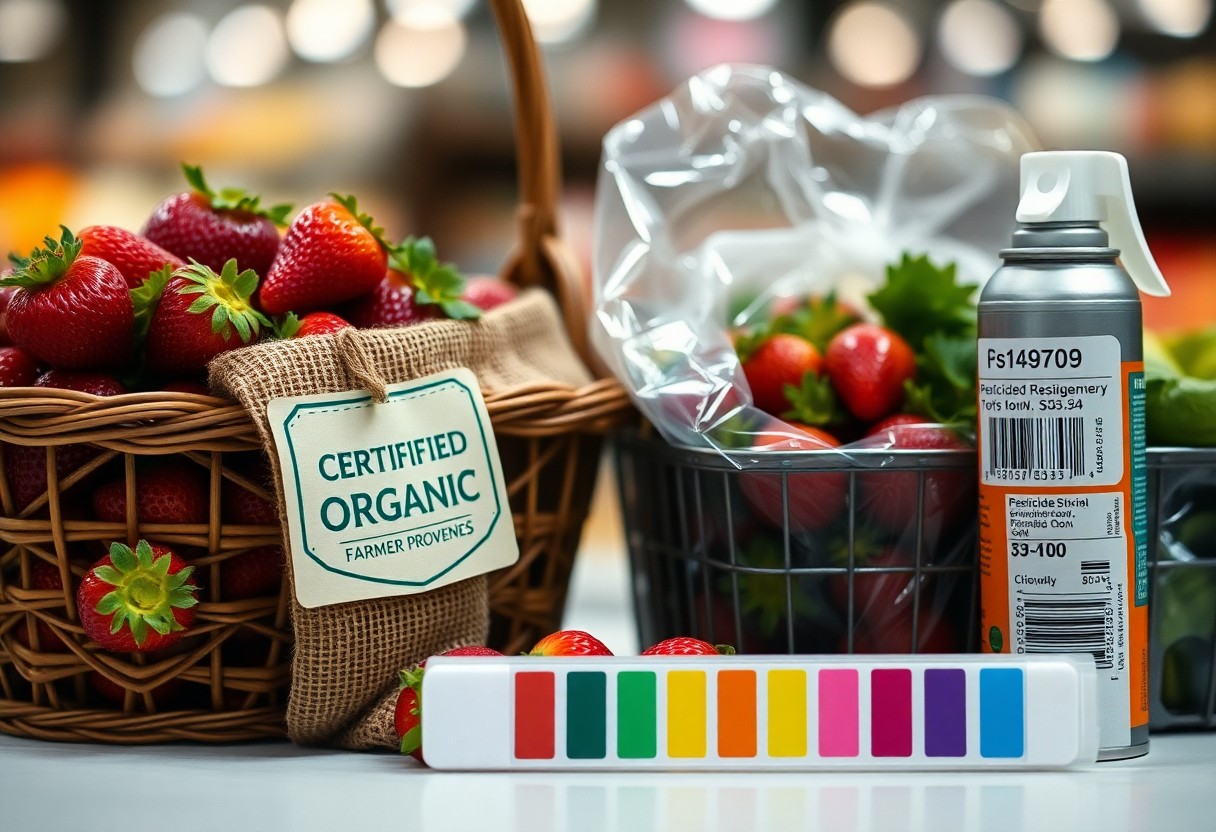
You’ll find conventional produce more likely to carry multiple synthetic pesticide residues; government monitoring (EFSA, USDA) shows most residues remain below legal limits, with exceedances being rare (generally under 2%). Organic produce has far fewer and lower-level residues but isn’t guaranteed residue‑free because of drift, prior land use, or permitted natural pesticides. For infants and children, who absorb more per body weight, reducing exposure by selecting organic for certain items can be important.
More details show that organophosphates and neonicotinoids-linked in epidemiological studies to developmental and neurobehavioral concerns when exposure is prenatal or chronic-are more common in conventional crops. You can cut residues further by washing, peeling, or cooking (reductions vary widely, roughly 30-90% depending on the compound). Organic standards still allow substances like copper and pyrethrins, so evaluate by food type: prioritize organic for high-residue items such as berries, leafy greens, and apples when possible.
Environmental Impact
You’ll see farming choices reshape landscapes: organic methods tend to boost soil carbon and biodiversity, while conventional systems often accelerate nutrient runoff and emissions. A meta-review, A Comprehensive Analysis of Organic Food, summarizes trade-offs in yields, pesticide residues, and ecosystem services so you can weigh environmental costs per calorie or hectare.
Sustainability in Organic Farming
You benefit from organic practices-crop rotations, cover crops, composting and reduced synthetic inputs-that improve soil structure and water retention. Studies report organic farms commonly support 20-30% greater biodiversity and can build soil carbon over time, though yields per hectare often run 20-25% lower than conventional systems.
Environmental Concerns with Conventional Farming
You should note conventional reliance on synthetic nitrogen fertilizers and pesticides drives major impacts: fertilizer-derived nitrous oxide is about 300 times more potent than CO2, and runoff fuels eutrophication and seasonal hypoxia; heavy pesticide use also links to pollinator and aquatic invertebrate declines.
You can point to river basins where those effects concentrate: high nutrient loads create seasonal dead zones that can exceed 5,000 square miles, and neonicotinoid residues are routinely detected in streams at levels harmful to aquatic insects; adopting buffer strips, precision fertilization or reduced pesticide regimes can cut those risks significantly.
Consumer Preferences
Your choices reflect trade-offs between cost, convenience and values: organic sales in the U.S. recently topped $60 billion, signaling strong demand, yet availability and price still push many shoppers toward conventional options; for a focused comparison of farming and residue outcomes see Differences Between Organic and Conventional Fresh Produce, which shows how on-farm practices translate to what you find on shelves.
Motivations for Choosing Organic
You often pick organic to lower pesticide exposure, support biodiversity, or back animal-welfare standards; meta-analyses like Barański et al. (2014) report higher antioxidant levels in organic produce, and many consumers cite health and environmental impact as primary drivers when willing to pay a premium.
Popularity of Conventional Groceries
You’ll notice conventional groceries dominate market share-organic makes up roughly 5-6% of total U.S. food sales-so conventional supply remains the default for most shoppers, retail chains, and food-service providers due to scale and logistics.
Because conventional production delivers year-round variety at lower cost, you benefit from broader selection, lower prices, and consistent supply; retailers like Walmart and regional grocers rely on conventional sourcing to keep prices down and stock stable in all seasons.
Myths and Misconceptions
You encounter many claims that oversimplify both systems: a 2014 meta-analysis found higher antioxidant levels in organic crops but no consistent nutrient advantage across the board, while monitoring programs show most conventional produce tests below regulatory limits though trace residues persist. You should weigh trade-offs-cost, yield, and exposure-rather than assuming one label guarantees superior health or environmental outcomes.
Debunking Organic Myths
You may hear organic means “no pesticides” or automatically healthier; in reality, organic rules allow certain natural pesticides like copper or spinosad and organic yields are often 10-25% lower, raising land-use trade-offs. Price premiums commonly range from 10-100% at retail, and while some studies show more antioxidants, most vitamins and minerals show negligible differences.
Misunderstandings About Conventional Foods
You might assume conventional equals unsafe, but regulatory agencies set maximum residue limits and routine testing finds most samples compliant; still, farmworker exposure and improper pesticide application pose real health risks that consumer residue data can’t capture. Genetically engineered crops (about 90% of US corn/soy) have also reduced certain insecticide uses in some regions.
You should also consider livestock practices: conventional systems have historically used more antibiotics for production, contributing to antimicrobial resistance concerns, prompting policy changes and reduced use in several countries. At the same time, conventional methods deliver lower prices and higher yields, so your choice depends on which risks and benefits you prioritize.
To wrap up
Summing up, you should weigh production methods, price, and health when choosing organic or conventional groceries. Organic uses natural fertilizers and restricts synthetic pesticides; conventional often yields lower-cost produce with greater availability. Health studies show modest nutritional differences but lower pesticide residues in many organic items. You can prioritize organic for high-residue items or choose conventional to stretch your budget while washing produce thoroughly.
FAQ
Q: What are the main differences in production methods between organic and conventional groceries?
A: Organic production relies on natural inputs and practices: avoidance of synthetic pesticides and fertilizers, use of crop rotations, cover crops, compost and biological pest control, and restrictions or prohibitions on genetic modification. Organic livestock must receive organic feed, have outdoor access, and be raised without routine antibiotics or growth-promoting hormones. Conventional production permits synthetic agrochemicals, many synthetic fertilizers, genetically modified seeds (where allowed), and industrial-scale practices such as monocropping and intensive confinement for some animal systems. Regulatory certification and record-keeping distinguish organic operations from conventional ones and require periodic audits.
Q: Why do organic groceries typically cost more than conventional ones?
A: Higher organic prices stem from several factors: generally lower yields per acre for some crops, more labor-intensive practices (weeding, mechanical cultivation, diversified rotations), higher costs for organic-certified seed and inputs, and certification and compliance expenses. Supply chain factors-smaller scale production, limited processing capacity, and shorter shelf life for some organic items-raise distribution costs. Conventional systems often benefit from economies of scale and government supports that lower producer costs. Market demand and branding also allow premiums for organic products, while many environmental and public-health externalities of conventional production are not reflected in conventional prices.
Q: Are organic foods healthier or safer than conventional ones?
A: The health differences are nuanced. Organic produce tends to have lower levels of synthetic pesticide residues; however, residues on conventional produce are usually below legal safety limits. Evidence for meaningful differences in macronutrients is limited; some studies report modestly higher levels of certain antioxidants or phenolic compounds in organic crops, but results are inconsistent and vary by crop and growing conditions. Organic animal products less often contain antibiotic residues and may have lower levels of antibiotic-resistant bacteria, and some organic dairy and meat show slightly different fatty-acid profiles (e.g., higher omega-3s). Food safety risks (pathogens, spoilage) are primarily controlled by handling, storage and cooking practices rather than organic status. For consumers concerned about pesticide exposure, choosing organic for high-residue fruits and vegetables or thoroughly washing produce can reduce risk, while overall dietary patterns (more fruits, vegetables, whole foods) have the largest impact on health.