There’s a quiet battle in your grocery aisle where store brands are engineered to outmaneuver national brands so you rarely notice. Retailers design packaging, pricing and shelf placement to deliver lower prices and surprising quality for your basket, while using mimicry and strategic promotions that can be misleading and tilt buying toward higher private-label margins. Understanding these tactics helps you spot real value and protect your wallet.
Key Takeaways:
- Packaging and product design are engineered to mimic or outmatch national brands-using similar cues, clear quality tiers, and contract-manufactured formulations so shoppers perceive parity or better without noticing the switch.
- Pricing strategy leverages lower marketing and distribution costs, retailer negotiating power, and streamlined SKUs to undercut national brands or offer premium private-label lines at higher margins, making the choice feel like a better deal.
- Placement and positioning use shelf location, promotional tactics, loyalty pricing, exclusive SKUs, and category-management data to steer shoppers toward store brands as the default or smarter option.
The rise of private labels
You’re seeing private labels quietly seize shelf share: in many European markets they exceed 30% market share, and in the US they commonly top 20%. Retailers design packaging, ingredients, and price points so you perceive equal value while the product is produced under contract in the same plants as national brands. Aldi and Lidl run >80% private-label assortments, showing how store-first design lets retailers control value perception without overtly signaling substitutions.
Market evolution, retailer strategy, and category targeting
Retailers target categories where you are most likely to switch-staples, private-label premium lines, and impulse items-and price them generally 10-30% lower than national brands. Packaging mimics cues you trust, while targeted assortment and in-store placement make the swap feel effortless; examples include Trader Joe’s, Walmart’s Great Value, and Kroger’s Simple Truth being positioned to capture both budget and brand-loyal shoppers.
Scale advantages and the role of category management
Scale gives retailers leverage through centralized buying, contract manufacturing, and consolidated logistics so you benefit from lower costs and faster SKU iteration. Category management then controls planograms, promotions, and private-label facings to nudge choice; that operational control turns lower unit costs into higher margins and sustained share gains against national brands.
Category teams use point-of-sale analytics, price-elasticity tests, and A/B shelf experiments to tighten private-label performance: data-driven assortment and targeted promotions can lift private-label penetration by multiple percentage points within weeks. Retailers also layer tiered private labels-value, mainstream, premium-so your assortment captures different occasions while reducing dependency on national-brand promotions.
Product design and quality engineering
You see private labels engineered to win on shelf: they’re often priced 10-30% below national brands while matching formulation and sensory profiles, and retailers use data to tune specs category-by-category. Suppliers like Private Labels: The Silent Giants Threatening National Brands show how chains leverage scale-Aldi carries roughly ~90% private-label SKUs-and you feel the impact when comparable quality arrives at a lower price point.
Formulation, specs, and co-manufacturing partnerships
You set tight spec sheets that prioritize cost-effective ingredients without obvious sensory loss, then partner with co-manufacturers (e.g., TreeHouse Foods-type co-packers) who already run national-brand lines. That lets you enforce shorter lead times, optimized batch sizes, and ingredient substitutions to shave margin while keeping shelf-life and texture targets, so your product performs like the national brand but lands on price and margin goals you own.
Packaging design, visual parity, and differentiation tactics
You use visual parity-matching color palettes, typography weight, and pack silhouettes-to trigger recognition, then layer tactics like a premium sub-brand, clear ingredient callouts, or matte finishes to justify slightly higher private-label prices. Retailers test shelf mockups and often capture 15-25% share gains in tuned categories by balancing mimicry with subtle differentiation that avoids legal conflicts.
In practice, you decide between structural upgrades (better barrier films, resealable zippers) and graphic cues (photorealistic imagery, spot varnish). Investing in packaging can cost more upfront but increases perceived value, lets you introduce tiered pricing (value, core, premium), and avoids direct head-to-head comparisons on efficacy-while you still keep the product priced to undercut national brands and protect margin.
Pricing and margin mechanics
You see store brands engineered to win by design: formulation and packaging are optimized to match or exceed perceived quality while being priced typically 10-40% lower than national brands. Retailers often source from the same factories, tweak specs, and place private labels adjacent to leading brands so your eye accepts the lower-priced option as equal. Examples like Aldi (~90% private-label SKUs), Trader Joe’s and Costco’s Kirkland show how positioning plus a deliberate price gap quietly shifts share to the retailer.
Cost structure, retailer margins, and supplier negotiations
You benefit from lower marketing and SKU-count costs: private labels skip big ad spends and favor simpler packaging, driving down COGS. Retailers capture higher gross margins-often several percentage points above comparable national items-by leveraging volume, centralized sourcing, and aggressive supplier bargaining. Suppliers frequently produce both branded and private-label lines, so you end up paying less while retailers extract better margins through slotting, volume rebates, and tighter supplier contracts that pressure input and packaging costs.
Pricing tactics: anchors, promotions, and dynamic pricing
You’re nudged by anchoring-national brands set a reference price so the private label appears as the smart buy-plus targeted promotions and EDLP strategies. Retailers run temporary price cuts or multi-buy deals to drive trials, then rely on loyalty-data-driven personalization to sustain higher penetration. Dynamic repricing (from in-store scanners and online algorithms) lets retailers adjust price points in real time, combining promotional cadence with individualized offers to keep your basket tilted toward private labels.
Anchoring works visually and numerically: by placing a national brand at, say, $3.49 next to a private label at $2.29, the private option becomes the implicit deal. Promotions use loss leaders or timed discounts to generate trial-then restore a persistent price gap so your repeat purchase feels like a win. Dynamic pricing systems-updated dozens of times per day online and nightly in-store-use loyalty scans and A/B tests to serve personalized coupons, which studies show can lift redemption and basket spend by double-digit percentages, accelerating private-label adoption without overt persuasion.
Supply chain and operational advantages
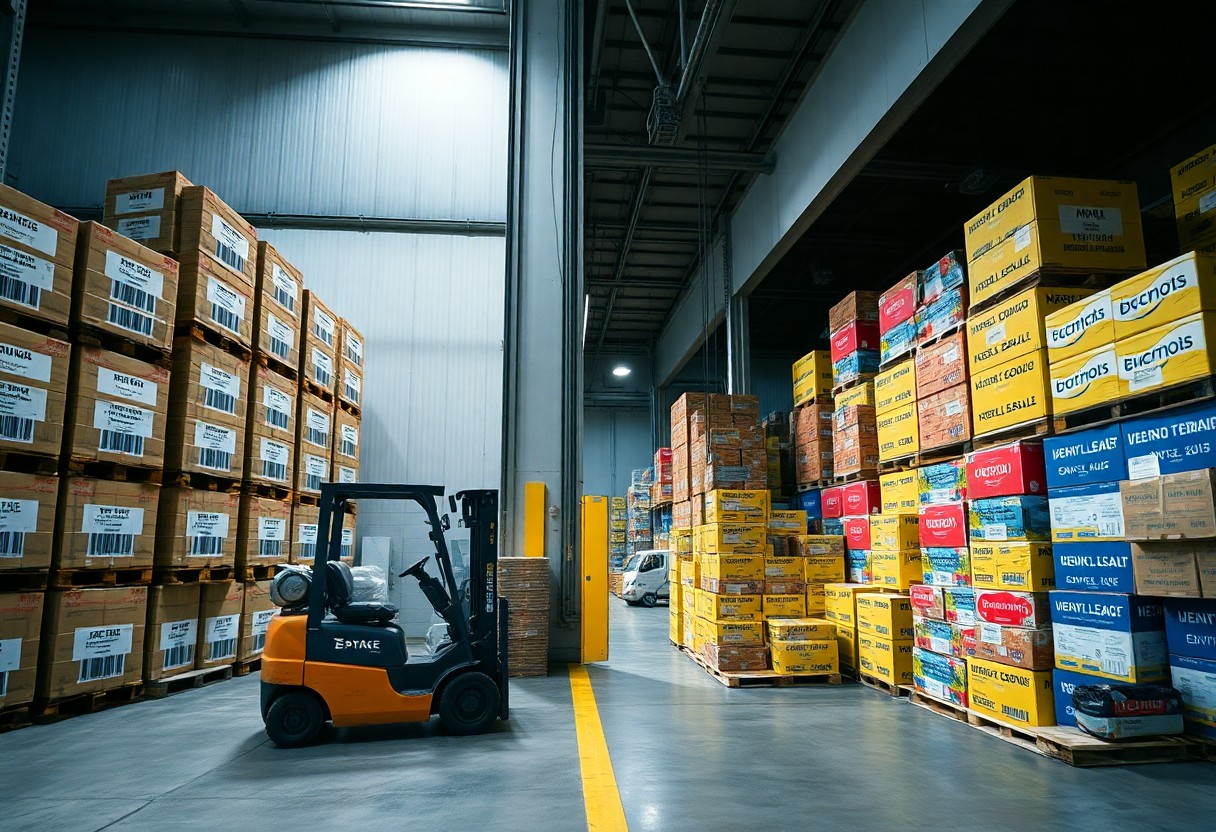
You benefit when retailers engineer supply chains around private labels: they negotiate high-volume contracts, cut out middlemen, and design packaging and sizing to match your shopping habits. Aldi’s ~90% private-label mix is a prime example-those scale benefits let them price many items 20-40% below national brands while keeping comparable quality, so you often don’t notice the swap from a national name to the store label.
Sourcing, private-label manufacturing, and quality control
You get national-brand quality because retailers write the specs, hire co-packers, and mandate testing. Retail chains require spec-driven formulations, batch certificates, and blind taste tests to ensure parity; Trader Joe’s and Aldi routinely redesign ingredient lists and packaging to match sensory targets while trimming cost. That control lets your store brand mimic national flavors and textures without the advertising premiums you pay for advertised brands.
Inventory, logistics efficiencies, and cost pass-through
You see lower prices thanks to fewer SKUs, standardized case packs, and centralized distribution: retailers optimize ordering, use cross-docking, and reduce direct-store deliveries to cut handling and freight. Those operational gains, plus lower promotional spend, let retailers pass savings to you-often reflected as everyday prices 20-40% lower than national equivalents-rather than temporary coupon-driven discounts.
You also benefit from tactical logistics choices that widen the private-label advantage: retailers use data-driven forecasting to tighten order cadence, enforce case-pack and pallet standardization to speed store stocking, and avoid slotting fees and co-op advertising payments that national brands carry. By lowering shrink through smaller, tailored pack sizes and by consolidating suppliers for core categories, retailers both reduce logistics cost and capture margin, which translates into steadier low prices and faster shelf availability for your preferred store brands.
Placement, merchandising, and brand architecture
Shelf placement, facings, and in-store promotion strategies
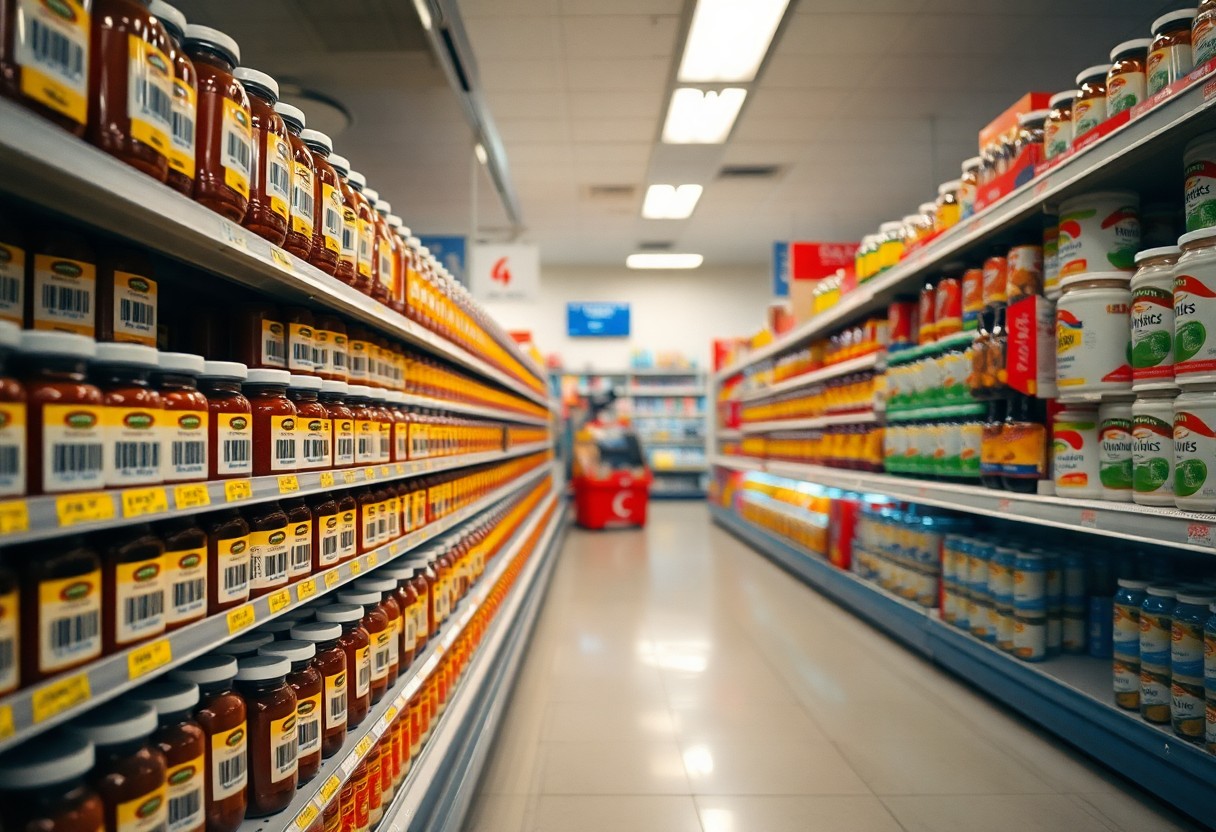
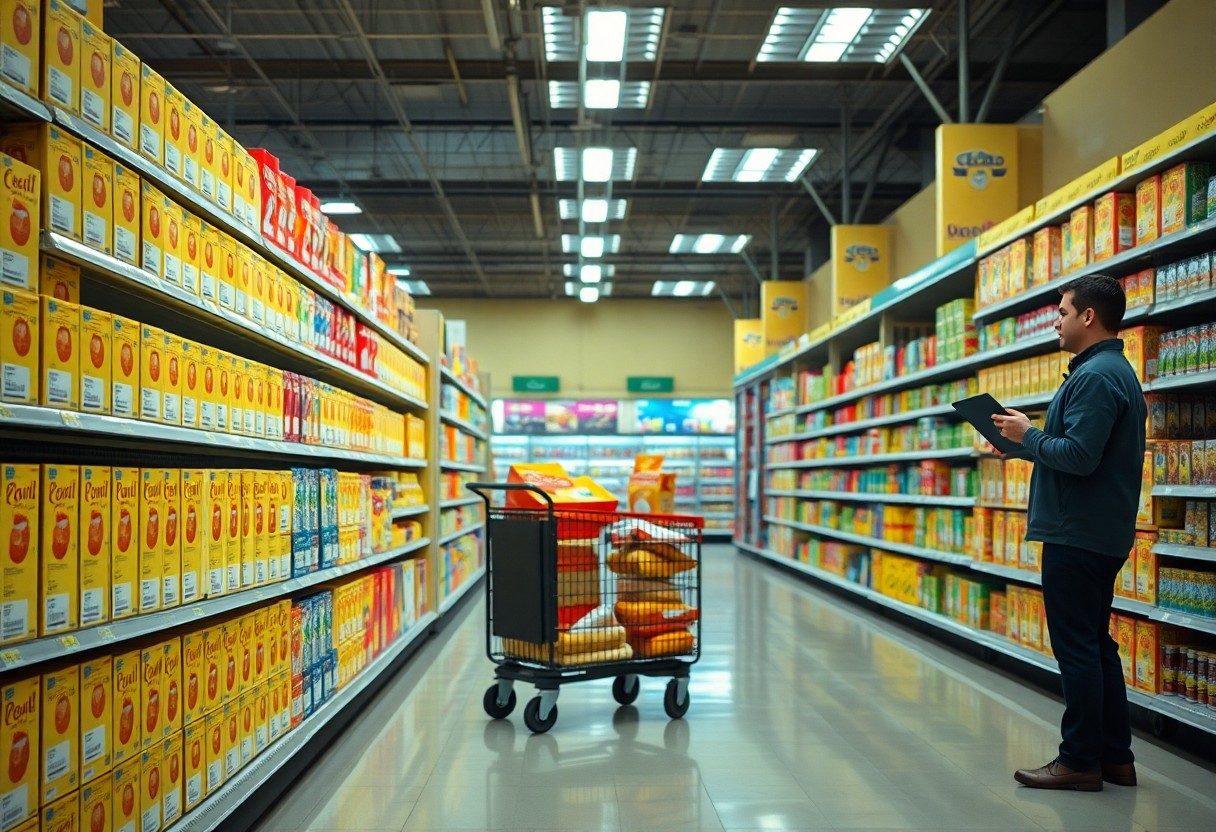
You see private labels get the best real estate: eye-level facings, endcaps, and checkout displays are reallocated to store brands to drive impulse buys and category penetration. Retailers use planograms to give store brands more facings and rotate them into promotional endcaps, producing double-digit uplifts in many categories. Aldi and Lidl, for example, use focused facings to make private labels feel like the default choice while national brands look incidental.
Tiered private-label portfolios: value to premium
You encounter tiered portfolios that capture shoppers across price points: a no-frills value line, a mainstream mid-tier, and a premium sub-brand that mimics national-brand quality. In the U.S. private labels hold roughly 17-20% share of grocery; in parts of Europe they reach 40-50%, driven by this tiering strategy. By pricing value lines below national brands and premium lines at near-parity, you get both volume and margin uplift for the retailer.
Retailers build discrete brand identities-Great Value, Simple Truth, Good & Gather, Aldi’s Specially Selected-so you don’t perceive them all as one generic source. Packaging, SKU selection, and targeted pricing signal quality: value SKUs are typically 5-20% cheaper than national equivalents, while premium private labels are often priced at parity to capture buyers seeking quality without paying national-brand premiums. This architecture lets you trade up within the same store, increasing basket size and loyalty.
Consumer psychology and stealth positioning
You encounter store brands crafted to slip past scrutiny: packaging, price tags, and shelf placement are tuned so comparison becomes effortful. Private labels account for about 17-18% of U.S. grocery dollars and often 40-50% in parts of Europe, letting retailers fund premium tiers and near-identical pack designs that make you choose them intuitively. By manipulating size, price endings, and adjacency to national brands, retailers shift your attention from brand to value, so you walk out convinced you found the better buy.
Perception engineering: cues, trust signals, and heuristics
You respond to visual and verbal cues-color, typography, ingredient callouts, and even bottle shape-so retailers copy those signals to gain trust. Chains like Aldi (roughly 90% private-label assortment) and Tesco with “Finest” use familiar color palettes and “made with” claims to trigger heuristics that equate similarity with quality. When packaging and price anchor align, blind tests frequently show no meaningful difference, letting store brands win on perceived value rather than superiority.
Loyalty programs, sampling, and behavioral nudges
You’re nudged through loyalty data, in-store demos, and pricing mechanics: Clubcard-style offers, personalized coupons delivered to your phone, and sampling stations reduce friction to trial and repeat purchase. Retailers leverage your transaction history to present time-limited deals, strategic bundle discounts, and targeted samples that bias choice toward their labels, turning momentary trial into habitual switching without overt persuasion.
You should note how loyalty systems translate data into behavior: retailers use purchase histories to issue tailored digital coupons, A/B test offers, and create scarcity cues (“only 2 left at this price”) to accelerate conversion. Sampling often pairs with coupons-try a cookie, get a coupon for the store brand-producing double-digit uplifts in short-term sales. Personal data and timed offers make the strategy scalable: the more you shop, the better they predict which private label will replace your usual national brand.
Final Words
To wrap up, you should recognize how private labels are engineered, priced, and merchandised to edge out national brands while staying invisible: you get comparable or better formulations from contract manufacturers, lower prices through streamlined supply chains, and strategic shelf placement and packaging that steer your purchase decisions-so when you shop, you’re often choosing retailer-driven winners rather than the big-name brands you think you are.
FAQ
Q: How are private-label products designed to mirror or beat national brands without being obvious?
A: Retailers use deliberate product design and packaging cues-color palettes, typography, photography style, and shape-to evoke the familiarity of national brands while tweaking elements to create a distinct store identity. Many private labels are made in the same co-packer facilities as national brands, allowing recipe parity or targeted improvements in texture and flavor based on in-store testing and shopper feedback. Brands are layered (value, mid-tier, premium/“artisan”) so consumers find what feels familiar at every price point; premium store lines carry upscale packaging and ingredient callouts to command higher margins while still appearing as part of the retailer’s trusted assortment.
Q: What pricing and in-store placement techniques encourage shoppers to choose store brands over national names?
A: Retailers deploy price anchoring, everyday-low-price tiers, and strategic discounting to make private labels appear better value-small differences in unit price, multipack savings, and “compare at” callouts steer cost-conscious choices. Shelf placement and merchandising matter: private labels are often placed at eye level, next to national brands, on endcaps, or in branded display islands to create parity in visibility. Loyalty-program offers, personalized coupons, and targeted promotions use purchase history to nudge trial, while subtle signage and package copy emphasize savings and quality rather than overt comparison.
Q: What backend capabilities let retailers outcompete national brands while keeping the switch subtle to shoppers?
A: Retailers leverage proprietary sales data, rapid product development cycles, and stronger category control to iterate products faster and tune assortments to local tastes. Bulk purchasing, direct manufacturer relationships, and flexible SKUs lower costs so private labels can be priced aggressively without sacrificing margins. Planogram control, coordinated promotions, and cross-category placement ensure private labels get premium shelf real estate; combined with targeted digital marketing and loyalty incentives, these operational advantages let store brands capture share quietly while preserving shopper trust.