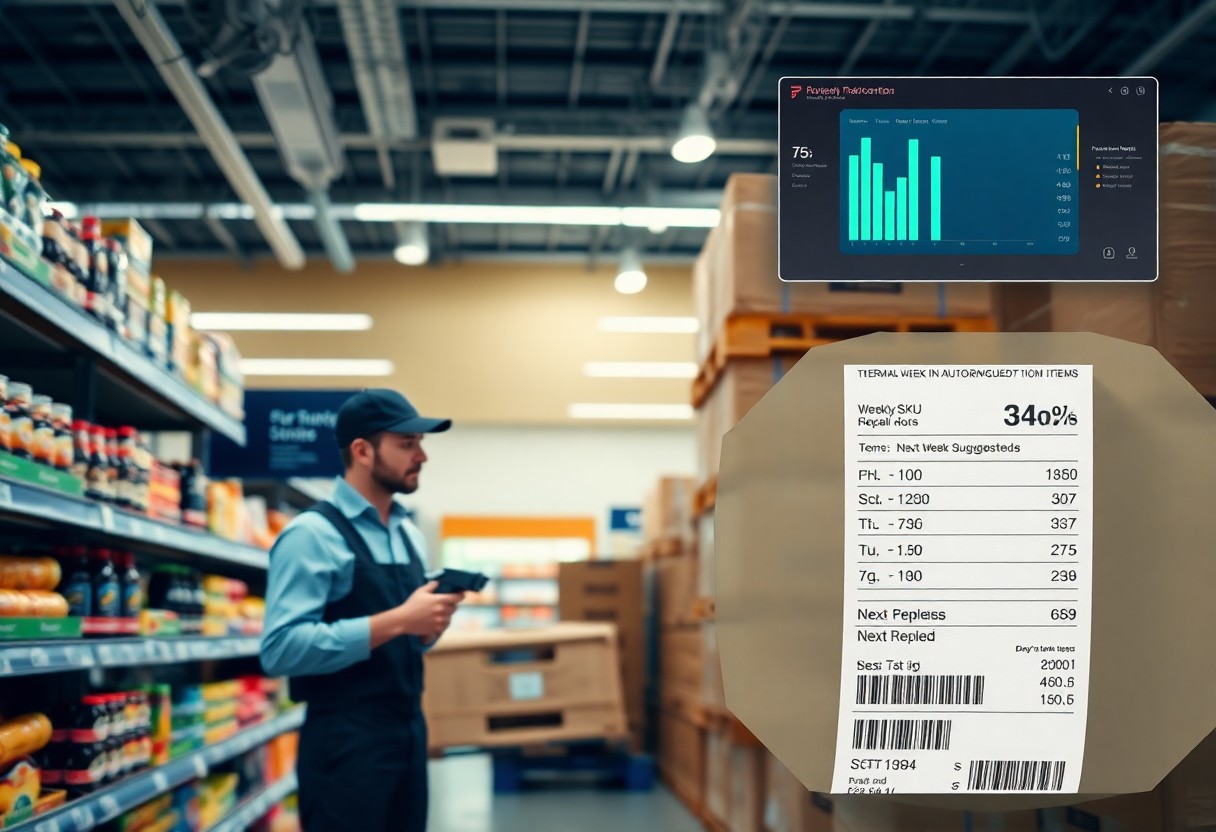
Prediction: using your purchase history and foot traffic, stores apply demand forecasting, combine weather data and local events, and run advanced algorithms to replenish shelves, often stocking items before you even know you want them, which boosts convenience but raises concerns about data-driven profiling.
Key Takeaways:
- Demand forecasting combines POS and loyalty data with time-series and machine‑learning models (ARIMA/Prophet, gradient boosting, neural nets) to predict short‑term item demand using price, promotions, seasonality and shopper-history features.
- Weather feeds and local-event signals (holidays, sports, concerts, school schedules) are ingested as external features so models can up‑ or down‑weight categories (e.g., soup vs. ice cream) at neighborhood granularity.
- Replenishment and inventory‑optimization algorithms translate forecasts into orders and shelf plans-accounting for lead times, safety stock and store capacity-so shelves are stocked before customers realize they want an item.
How demand forecasting works
Demand forecasting fuses your sales history with external signals-weather, local events, promotions-and runs them through time‑series and machine‑learning ensembles (ARIMA, XGBoost, LSTM) to predict demand 48-168 hours ahead. Retailers feed forecasts into automated replenishment so shelves are stocked before customers even decide, while shorter horizons protect perishables and longer horizons guide promotions and buying. Algorithms learn that a 5°C heat spike can lift ice‑cream sales by 10-30% and will shift orders accordingly to minimize both stockouts and waste.
Forecast horizons and granularity (SKU, store, and time-window choices)
You choose between SKU‑store‑day forecasts (most precise) and aggregated forecasts that reduce noise and compute. Perishables often use 1-3 day horizons with hourly or daily windows; staples and promotional planning use 4-12 week horizons. When a local football game doubles beer demand at one store, only store-level, SKU‑level models catch it. Tradeoffs: fine granularity improves accuracy but costs CPU and data; coarser forecasts simplify replenishment but raise stockout/waste risk.
Key performance metrics (accuracy, bias, and service levels)
You measure forecast quality with accuracy (MAPE, RMSE), bias (mean error), and service levels (fill rate, percent of demand met). Typical targets: MAPE under 10% for stable SKUs and 20-30% for promotions; aim for 95%+ service level on core items. Positive bias signals overstock and waste; negative bias signals stockouts and lost sales. Teams monitor metrics by SKU decile and adjust safety stock or model features accordingly.
In operations you convert forecast error into safety stock using probabilistic methods: safety_stock = z * sigma_LT, where z for 95% service level is 1.645. For example, if your lead‑time demand standard deviation is 10 units, you’d hold ~16-17 extra units to hit 95%. You also track mean forecast error (MFE) to detect bias and set automated triggers-retrain weekly if MAPE > 20% for a SKU-to limit waste and lost sales.
Data inputs that drive forecasts
Internal signals: POS, inventory, loyalty and promotion data
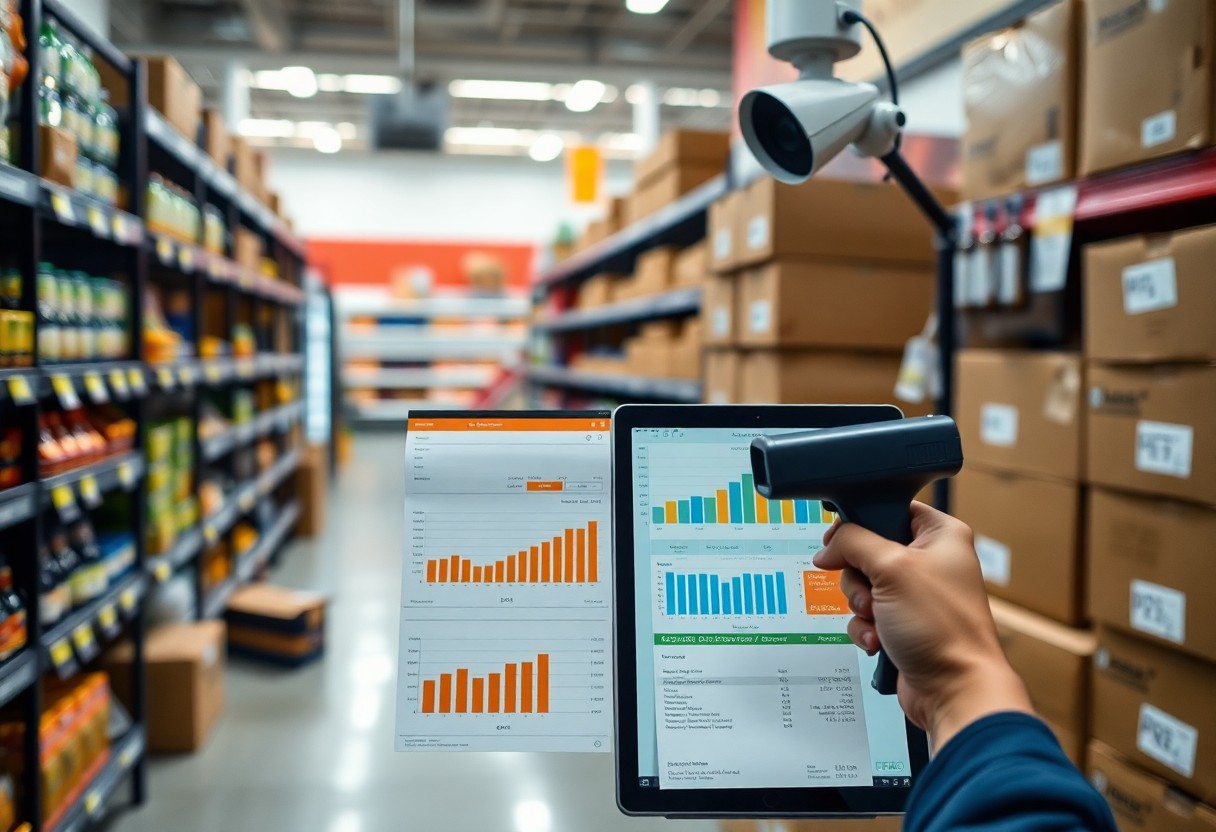
Your point-of-sale timestamps, daily inventory levels, loyalty profiles and promotion logs feed the models that predict demand. POS shows minute-level sales patterns, inventory reveals turnover and shrink, loyalty identifies repeat purchase cycles, and promotions can lift units sold by 20-100%. When you combine uplift tests and causal models, you can pinpoint which offers drive incremental sales and avoid stockouts or excess orders that cause waste, delivering reduced spoilage and higher on-shelf availability.
External signals: weather, local events, holidays, and market trends
Weather APIs, event calendars, holiday schedules and Google Trends supply exogenous drivers that shift demand by category; a sudden heat wave or heavy rain can move ice cream, charcoal or soup volumes by tens of percent, while a stadium game or fair creates neighborhood spikes. You ingest temperature, precipitation, expected attendance and competitor pricing to tune store-level forecasts, helping prevent shelf-emptying surges and align staffing and replenishment.
External signals: weather, local events, holidays, and market trends – deeper dive
You treat weather as features (max/min temp, precipitation, humidity, heat index) at the zip-code or store catchment level and apply lead-time windows-1-14 days-to capture short-term behavior; you flag holidays with rolling lead-up indicators and encode events by expected attendance and demographic fit. You deploy models from gradient-boosted trees and Prophet to LSTM ensembles and hierarchical Bayesian frameworks that pool signals across thousands of SKUs. In pilots, adding granular weather and event features often cuts forecast error by 15-30%, reduces missed sales and lets you pre-stage inventory or run targeted offers to capture demand spikes.
Weather and local events in practice
Algorithms fuse 7-14 day weather forecasts, calendar feeds, and POS trends so you get the right stock before demand hits; models upweight recent patterns (e.g., a 3-day heatwave forecasting a 20-50% jump in cold drinks) and downweight noise, while replenishment systems create 24-48 hour reorder windows to limit spoilage and capture short-lived surges.
Mapping weather forecasts to product demand (temperature, precipitation, seasonality)
You map numeric weather features-temperature, precipitation probability, heating/cooling-degree days-into demand multipliers: a sustained +10°F can lift ice cream sales by ~40%, heavy rain boosts ready-meals and soup by ~10-20%, and seasonal shifts reallocate produce and bakery cycles weeks ahead using ensemble forecast inputs and time-series models.
Weather → Inventory Actions
| High temp (≥85°F) | Increase chilled beverages & ice cream by ~+35-45%; shorten replenishment to 24 hrs |
| Heavy precipitation (>60% chance) | Boost ready meals, soup, single-serve coffee by +10-20%; stock umbrellas/accessories |
| Seasonal onset (weeks) | Shift produce orders, promotional displays, and frozen-to-fresh ratios; plan 2-4 week lead times |
| Cold snap (sudden ≤32°F) | Increase bread, milk, and comfort foods by +15-30%; flag perishables for conservative replenishment |
Event-driven adjustments: sports, concerts, school calendars, and local promotions
You ingest ticketing feeds, school start dates, and local ad schedules so your models predict spikes-home football games often drive 20-50% uplifts in beer, snacks, and charcoal; back-to-school weeks increase lunch packing items by ~15%, and concert nights shift late-night ready-meal demand upward within a 48-72 hour window.
Operationally you link event APIs (stadium schedules, ticket sales) with historical uplift models and store catchment demographics to set event-specific actions: pre-build pallets, extend night-shift replenishment, and create temporary planograms. Use causal uplift modeling to isolate event effects from promotions, then set hard caps on perishable orders and automated emergency replenishment rules (often within 6-24 hours) to avoid both stockouts and excess waste; monitor POS in real time so you can throttle deliveries or trigger flash promotions during unexpected overperformance.
Algorithms and modeling approaches
Classical time-series and statistical models (ARIMA, exponential smoothing)
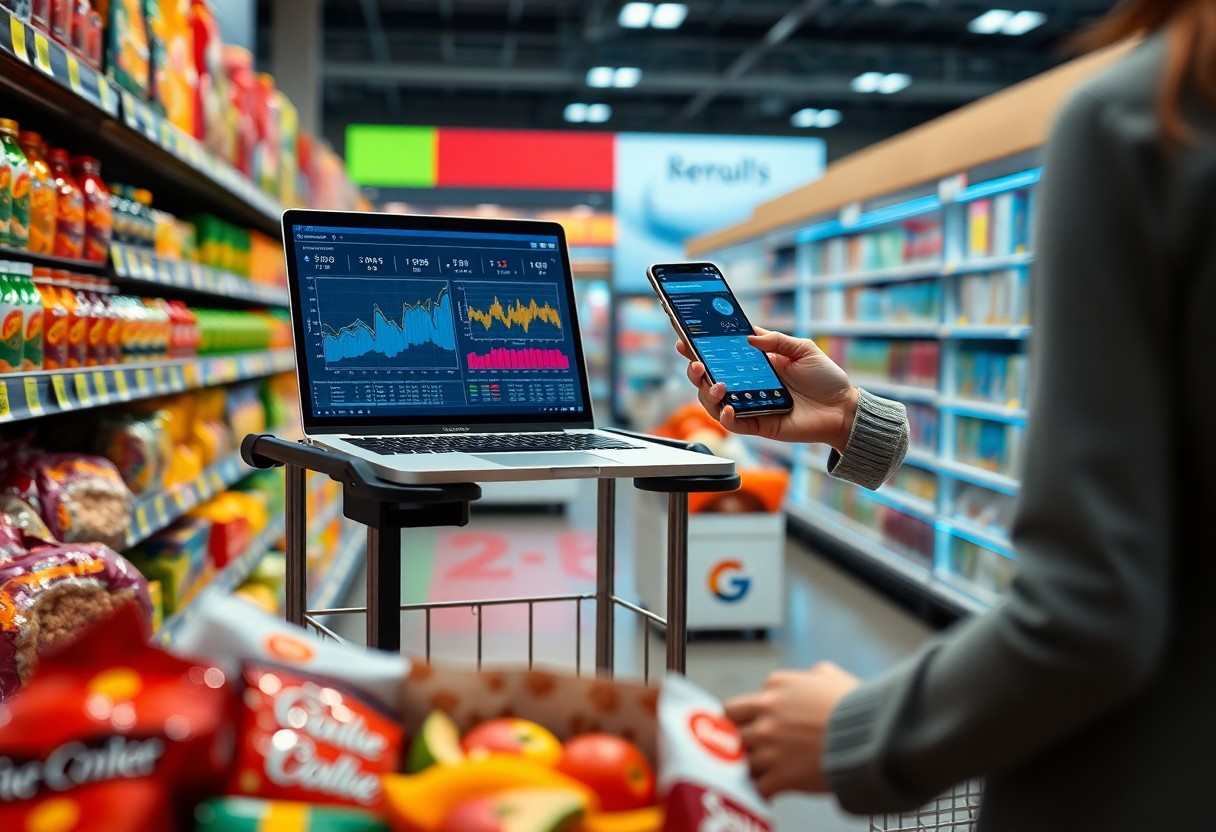
You rely on ARIMA and exponential smoothing to capture trend and seasonality across 7-14 day horizons; SARIMAX or ETSX let you include weather and local events as external regressors, for example adding temperature and holiday flags to model sudden spikes. Many stores use 12-13 weeks of history and weekly seasonal periods, tuning differencing and smoothing so your replenishment orders match predictable cycles and avoid both overstock and out-of-stock.
Machine learning and hybrid models (tree ensembles, neural networks, causal inference)
You combine tree ensembles like XGBoost or random forest with neural nets (LSTM, temporal convolution, attention) to handle dozens to hundreds of features-store-level weather, local events, promotions, foot-traffic sensors. Tree ensembles excel on tabular features like local events and weather, while attention-based networks pick up irregular temporal effects; adding causal inference (causal forests, uplift) shows whether an event actually drove demand rather than just correlating with it.
You focus on feature engineering-50-200 features including lagged sales, rolling means, temperature, precipitation, event flags and competitor prices-and often stack models (GBM meta-learner over LSTM residuals). Validate with time-series CV and metrics like MAPE/RMSE, because overfitting is dangerous and can create stockouts; pilots often report 10-30% reductions in perishable waste when weather and events are modeled correctly, and causal methods help you optimize promotions without inflating forecasts.
Turning predictions into stocked shelves
You combine demand forecasts with real-time signals like weather and local events so your stores get the right mix before customers arrive; algorithms from time-series ARIMA and gradient boosting to neural nets ingest temperature, game schedules, and historical SKU-store sales to predict spikes. Retail case studies show retailers achieve double-digit reductions in stockouts and lower perishable waste by aligning ordering windows, and you can learn more in Retail Analytics: How Stores Predict What You’ll Buy Next.
Replenishment, ordering, and distribution planning (safety stock, lead times)
You calculate safety stock from forecast variance and service-level targets, often keeping cover for the supplier lead time (commonly 2-7 days for regional items, 10-21 for imports). Algorithms blend store-level forecasts with weather and event signals so your ordering system raises quantities ahead of predicted demand surges, reducing the chance of stockouts without inflating overstock that drives spoilage.
In-store execution: planograms, dynamic pricing, and workforce scheduling
You translate forecasts into planogram changes, real-time price moves, and shift plans: shelf facings rotate for hot SKUs, electronic shelf labels enable minute-by-minute price tests, and scheduling systems add staff for predicted peaks. Machine-learning models estimate price elasticity and the ROI of extra facings, letting you prioritize actions that boost conversion and margin.
For example, you can run A/B planogram tests at 50 test stores and observe a typical sales lift of 6-12% for featured SKUs; electronic shelf labels cut markdown latency from days to hours, protecting margin while preventing panic markdowns that cause waste. Your workforce tool should assign higher-skilled floor staff during event-driven peaks (tailgates, heat waves) and trigger mobile alerts for restock when RFID or shelf sensors detect falling on-shelf availability, ensuring execution matches the prediction and minimizing both missed sales and excess inventory.
Governance, evaluation, and continuous improvement
Model monitoring, A/B testing, and feedback loops
You instrument models with real-time KPIs – MAPE, fill rate, and stockouts – and set alerts for model drift. You run randomized A/B tests across store clusters (for example, weather-triggered reorder vs baseline) to measure lift in sales, waste, and customer service; pilots commonly yield 10-30% fewer stockouts. You ingest hourly POS and event data into automated retraining pipelines, keep shadow models for safety, and use causal metrics to separate true demand increases from promotion-driven artifacts.
Privacy, ethics, and bias mitigation in customer- and location-based forecasting
You prefer aggregated store- or cohort-level signals over individual profiles, and you apply hashing, truncation, or differential privacy to reduce re-identification risk while complying with GDPR/CCPA. You include fairness checks so forecasts don’t systematically deprioritize low-income or minority neighborhoods, for example by forbidding inventory allocation rules that reduce shelf stock based on past low spend.
You operationalize ethics with concrete controls: retain raw customer identifiers for a limited window (e.g., 30-90 days), enforce encryption and role-based access, and publish audit trails for model decisions. You validate fairness by slicing performance across demographics and locations, use synthetic data or cohort aggregation when training to avoid small-sample leakage, and tune privacy budgets (noise/epsilon) conservatively. You also build human-in-the-loop overrides for sensitive cases, require third-party audits for high-risk models, and document trade-offs so you can trace whether a weather-driven reorder or event-based surge unfairly shifted stock away from vulnerable communities. Strong governance prevents profiling and costly compliance failures while keeping your forecasts operationally effective.
Summing up
From above, you see how grocers use demand forecasting models that combine sales history, weather data, and local events to predict your needs; machine-learning algorithms analyze patterns and personalize orders, while store-level analytics translate forecasts into inventory and staffing decisions so shelves are stocked before you even decide. This system reduces waste, shortens lead times, and nudges what you buy next week through data-driven recommendations and timely promotions.
FAQ
Q: How do grocery stores forecast what you’ll buy next week?
A: Stores build demand forecasts by combining historical sales at the SKU, category and store level with recent trends, promotions, calendar effects (weekends, holidays), loyalty-card and basket data, shipment and inventory records, and external indicators (economic data, regional mobility). Models range from classical time-series (exponential smoothing, ARIMA/SARIMA) to machine-learning regressors (XGBoost, random forests) and deep-learning models (LSTM, Transformer-based seq2seq). Forecasting pipelines perform feature engineering (lags, rolling averages, promotion flags, weather and event features), hierarchical reconciliation (aligning SKU forecasts with category totals and store clusters), backtesting and calibration using metrics like MAE/RMSE and probabilistic metrics (CRPS), and they produce point and interval forecasts. Those outputs feed replenishment rules and optimization engines that translate a predicted demand distribution into order quantities, safety stock and delivery schedules so shelves are restocked before shortfalls occur.
Q: How do weather forecasts and local events change what a store stocks?
A: Weather and local events act as high-value, short-term features that change shopper behavior in predictable ways: heat waves lift ice cream, cold snaps increase soup and hot beverages, rain can boost ready-to-eat meals and umbrellas, and storms raise demand for bottled water and batteries. Stores ingest meteorological forecasts (temperature, precipitation, humidity) and event calendars (sporting events, concerts, school schedules, parades) to modify short-horizon forecasts and order lead times. They also use geo-localization – distinguishing neighborhoods affected by a festival or a road closure – to reroute inventory. When a severe weather alert or major event is detected, systems increase replenishment frequency, raise temporary safety stock for fast-moving SKUs, and stage promotional or grab-and-go displays to match expected spikes.
Q: What algorithms and systems let grocers stock shelves before customers even know what they want?
A: Multiple algorithmic layers work together: demand-forecasting models produce probabilistic demand; inventory-optimization algorithms (multi-echelon inventory models, stochastic optimization, newsvendor variants) convert demand distributions into order quantities and safety stock; replenishment engines and warehouse allocation (linear programming, heuristics) schedule shipments; assortment and planogram optimization decide which SKUs get shelf space. For predicting complementary purchases, stores use market-basket analysis and association-rule or collaborative-filtering techniques (Apriori, FP-Growth, matrix factorization) to infer what additional items a customer is likely to pick. Online and reinforcement-learning approaches enable dynamic pricing, promotions and ordering policies that learn from live data. Real-time anomaly detection and online learning update models as sales deviate from expectations. All of this runs inside ERP/OMS/WMS ecosystems with human-in-the-loop checks, A/B tests for model changes, and privacy controls to ensure customer data is handled appropriately.