With stockouts driving immediate revenue loss and long-term customer flight, you see why stores dread those signs: they cause lost sales, increase spoilage and handling costs, and prompt shoppers to substitute or abandon carts-behavior that produces customer churn and erodes brand trust. Retailers counter this with advanced forecasting, real-time replenishment, safety stock, shelf sensors, tighter supplier collaboration, and staffing changes to keep shelves full and protect margins and reputation.
Key Takeaways:
- Financial impact: Stockouts cause immediate lost sales, smaller baskets and fewer impulse purchases, higher fulfillment and emergency-replenishment costs, and long‑term revenue loss from churn – stores fight this with better demand forecasting, safety stock, supplier SLAs and automated replenishment to reduce missed sales and costly rush orders.
- Behavioral impact: Customers substitute to lower‑margin products, abandon trips, or switch retailers; visible out‑of‑stock signs amplify frustration and accelerate switching – stores counter with real‑time shelf alerts, dedicated replenishment staff, planogram discipline and visible in‑store alternatives to limit substitution and abandonment.
- Brand‑trust impact: Repeated stockouts erode confidence and loyalty, lower willingness to pay, and generate negative word‑of‑mouth – prevention includes omnichannel fulfillment (BOPIS/ship‑from‑store), accurate online inventory displays, RFID/analytics for visibility, and recovery tactics (notifications, targeted offers) to restore trust.
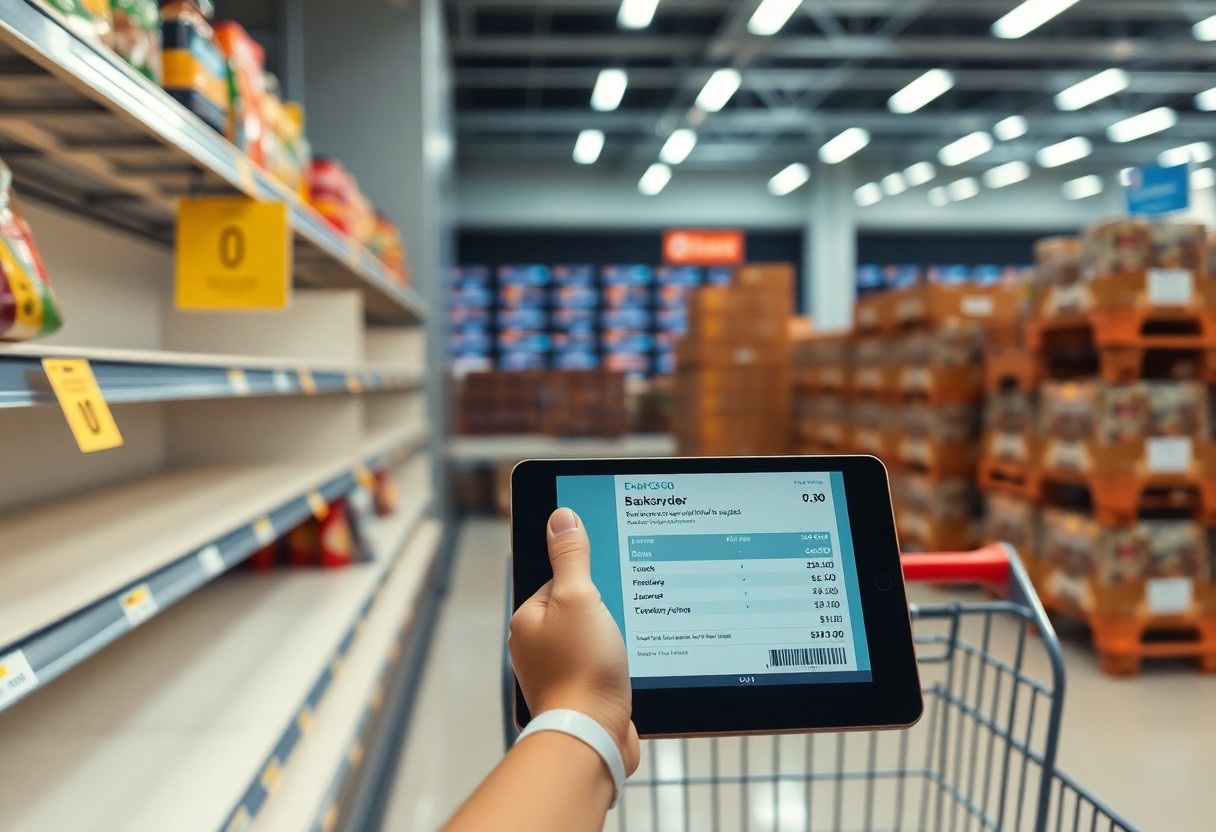
The financial impact of stockouts
When key SKUs disappear, you don’t just lose one sale-you erode revenue, loyalty and margin across the store. Studies often estimate 4-8% of potential sales are forfeited to stockouts; on a $5M monthly grocery store that’s roughly $200k-$400k in missed revenue. You also face repeat visit decline and higher operating costs as teams scramble to patch gaps, so the headline sales loss understates the broader financial bleed.
Direct lost sales, basket shrinkage and margin erosion
Out-of-stocks trigger substitutions and abandons: research commonly finds 20-40% of shoppers will buy a different brand and 10-25% will leave or shop elsewhere, shrinking average basket value by 2-6%. You suffer not only lost unit sales but lower-margin mix shifts when premium items are replaced by cheaper options, and recurring misses accelerate long-term churn that’s far costlier than a single transaction loss.
Hidden costs: spoilage, markdowns and emergency replenishment
Beyond visible lost sales, you incur hidden hits: perishable spoilage increases shrink (category-specific rates often exceed store averages), forced markdowns can slash margins by 20-50%, and emergency replenishment-rush freight or supplier rush fees-adds unpredictable cost per unit. These outlays quietly compress gross margin and make inventory planning more expensive and less reliable.
Operationally, stockouts cause overcorrection: you order safety stock, then face excess that must be discounted or thrown away-breads and deli items are classic examples where a single planning error converts into daily waste. Suppliers often charge rush fees or air freight that can multiply logistics costs by 2-5x, while promotional markdowns to clear mismatches permanently erode margin expectations on that SKU and its category.
Behavioral effects on shoppers
Empty shelves change how you shop: industry reports show 20-30% of shoppers substitute and 10-15% abandon trips, which shrinks immediate spend and erodes loyalty; retailers debate signaling tactics – see Shortage signs versus facing: How retailers should deal … – and pilots replacing signs with facing have cut perceived stockouts by about 12%.
Substitution, trip abandonment and reduced visit frequency
When you substitute, you often pick a lower‑margin brand or skip add‑ons, and retailers estimate average basket value drops by roughly 8-12%; repeated stockouts prompt some customers to switch stores, with chains reporting a 5-10% decline in visit frequency after sustained availability problems, especially for high‑need SKUs like baby formula or medications.
Friction, frustration and negative word‑of‑mouth
Stockouts create friction at shelf and service points, and you’re more likely to vent online or to friends; studies and retailer analytics link stockout spikes to a measurable NPS decline (often 5-15 points), increasing negative reviews and raising acquisition costs as brands work to regain trust.
More specifically, you contact customer service and staff interventions rise during shortages, driving up labor and handling costs; retailers report complaint volumes can jump 20-40% during major stockout events, and social posts about empty shelves amplify perceptions of unreliability, making recovery slower and more expensive than the initial lost sale.
Brand‑trust and long‑term reputation damage
When your shelves keep showing out‑of‑stock signs, shoppers infer systemic failure and you start losing more than a sale: studies show as many as 30% of consumers try competitors after repeated misses, and social complaints amplify that damage. You can read deeper analysis in Shortage Signs vs. Facing: Cheap Talk in Supply Chains. Retailers invest to avoid this because eroded trust raises acquisition costs and lowers customer lifetime value.
Perceived reliability and customer loyalty loss
Repeated stockouts make you look unreliable, which directly reduces repeat purchase rates and basket size; research indicates immediate substitution rates can exceed 40% when favorite SKUs disappear. You’ll see lower NPS, more one‑time purchases, and shoppers who permanently shift shopping routines-so preventing even small, frequent gaps becomes a measurable ROI decision for operations and merchandising teams.
Effects on private labels, supplier relations and market positioning
When your private labels aren’t available, you cede margin and positioning as shoppers buy national brands instead; suppliers tighten terms, demand better forecast accuracy, or impose chargebacks, and competitors use that weakness to reposition. Expect private‑label share swings and weakened value or premium positioning unless you fix fill‑rate performance quickly.
In one case study, a regional chain experienced an 18% drop in private‑label sales after two months of intermittent stockouts; suppliers responded by insisting on daily forecasts and applying chargebacks, forcing the retailer to invest in 99%+ SKU fill targets and vendor‑managed inventory to recover share and rebuild trust.
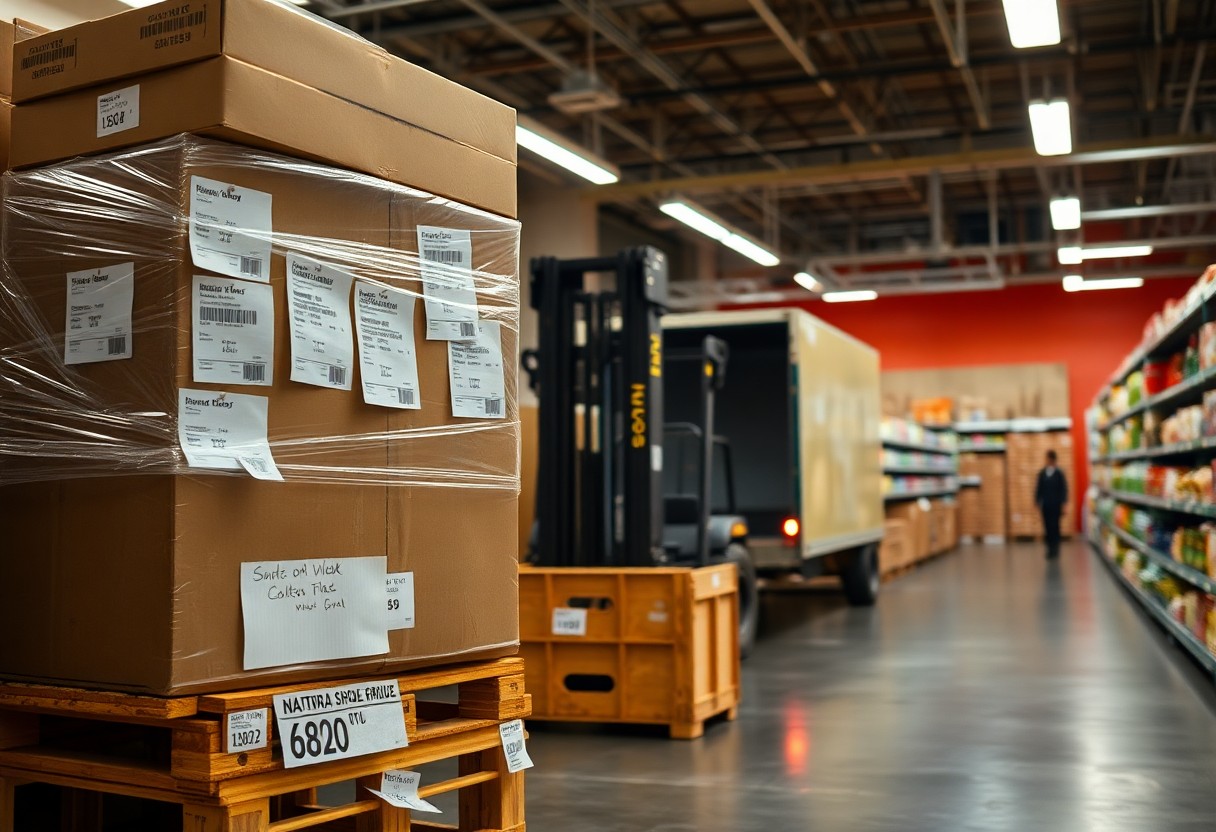
Operational and supply‑chain root causes
You see stockouts hitting your margins: estimates put lost sales at 3-8% of category revenue and repeated empty shelves erode brand trust. Root causes span forecasting, lead‑time variability and supplier constraints; for real‑world masking tactics see Here’s how supermarkets disguise empty shelves. You must balance safety stock, supplier cadence and emergency freight to avoid customer defection and hidden costs.
Forecasting errors, lead‑time variability and supplier constraints
You face forecasting misses when promotions, weather or seasonality spike demand-promotions can double or triple sales on short notice-while lead times swing from same‑day local replenishment to several weeks for imports. That variability creates bullwhip effects and forces you into either excess inventory or frequent emergency orders. Supplier minimums, volume constraints and capacity limits further restrict your ability to smooth supply, increasing logistics spend and stockout risk.
In‑store execution: replenishment, shelf availability and planogram failure
You rely on store teams to turn truckloads into visible stock, yet limited labor, mismatched case packs and planogram non‑compliance leave facings empty even when back‑stock exists. Restocking cadence matters-high‑turn SKUs need multiple touchpoints per day-otherwise shoppers substitute, postpone, or leave, damaging conversion and loyalty.
Digging deeper, you find issues like asynchronous replenishment windows (night unloading vs. daytime front‑of‑store work), shelf‑ready packaging that won’t fit planogram slots, and weak cycle‑count discipline. Fixes that deliver measurable improvements include handheld scans, targeted cycle counts, tighter planogram audits and cross‑docking or real‑time shelf sensors, which reduce emergency freight and restore on‑shelf availability.
How retailers prevent stockouts: systems and processes
Technology solutions: POS analytics, RFID, automated replenishment and AI forecasting
You rely on real‑time POS analytics to spot hourly sell‑through and trigger replenishment, while RFID lifts on‑hand accuracy to >95% in many pilots so you stop chasing phantom inventory. Automated replenishment ties sales to supplier orders and AI forecasting can cut forecast error by roughly 10-20% versus basic models, helping you close the gap that otherwise costs retailers an estimated 3-8% of sales to out‑of‑stocks.
Process levers: safety stock strategy, vendor collaboration and promotion planning
You set safety stock to target service levels (commonly 95-99% service), share POS and cadence data with suppliers via VMI/EDI to remove blind spots, and co‑plan promotions so orders scale with expected lifts-promotions often drive 2-5× baseline demand and, if unplanned, can multiply stockouts. Strong vendor SLAs and weekly cadence reviews keep your shelves full without bloating inventory.
You calculate safety stock using a service‑level z‑score times demand variability over lead time (safety stock = z × σLT); for example, with σLT = 30 units and a 98% service target (z≈2.055) you hold about 62 extra units. Shortening lead time by even two days or sharing daily POS with suppliers can reduce that safety stock materially, while joint promotion forecasts and contingency buffers cut promo stockouts that single‑handedly erode category share.

Measuring, diagnosing and reducing out‑of‑stocks
You track out‑of‑stocks with POS gaps, daily shelf scans and supplier fill‑rate reports, then prioritize fixes by impact: a typical OOS rate of 5-10% can shave off 2-6% of revenue annually, so you focus on high‑velocity SKUs and store clusters where shortfalls are frequent. Successful programs marry faster forecasting, tighter lead‑time monitoring and frontline execution-one regional chain cut OOS from 9% to 3% by changing replenishment cadences and supplier SLAs.
Key metrics: OOS rate, fill rate, lost‑sales estimation and service levels
You measure OOS rate as SKU‑store‑days empty versus total SKU‑store‑days, aiming for service levels of 95-99% on top sellers. Fill rate shows how much demand you satisfy at order time; supplier fill‑rate under 90% signals systemic risk. Lost‑sales estimation uses substitution and conversion: if substitution is 40% and OOS is 8%, you’re losing roughly 4.8% of sales from that SKU set unless mitigated.
Continuous improvement: root‑cause analysis, cross‑functional playbooks and pilot tests
You run Pareto analyses and 5‑Whys on the worst SKU‑store pairs, then codify fixes into playbooks that align procurement, store ops and suppliers. Pilots test solutions-safety stock adjustments, daily replenishment, vendor scorecards-on matched stores for 6-12 weeks and measure OSA uplift, sales recovery and labor impact. Priority is on fixes that deliver >2 percentage‑point OOS reduction with net positive margin.
You begin by segmenting by velocity and OOS frequency to find the top 20% of SKUs causing ~80% of shortages, then map causes to five buckets: forecast error, lead‑time volatility, supplier short‑ship, in‑store replenishment failure and planogram mismatch. Your playbook prescribes specific actions per bucket-e.g., add 2-4 days of safety stock for SKUs with >20% lead‑time CV, enforce daily morning replenishment for high‑turn perishable aisles, and apply vendor penalties or conditional allocations when fill‑rate <90%. Design pilots with matched control stores, run 8-12 weeks, and track OSA, incremental sales, shrink and labor; many pilots yield a 4-6 percentage‑point OOS drop and 2-5% sales recovery, which you scale only after verifying margin and operational feasibility.
Final Words
Upon reflecting, you understand that stockouts siphon immediate sales, reduce basket size, push you to competitors, and erode brand trust; retailers respond by improving demand forecasting, keeping safety stock, enforcing supplier agreements, deploying real-time inventory systems and rapid replenishment and shelf audits to prevent empty shelves, because replacing lost loyalty and revenue is far costlier than fixing supply gaps.
FAQ
Q: Why do grocery stores lose money when items are out of stock?
A: When a product is unavailable the immediate sale is lost and often the whole shopping basket shrinks-customers skip complementary items or abandon the trip. Stockouts force substitutions that frequently shift purchases to lower-margin brands or competitors, reducing gross profit. There are also direct operational costs: emergency replenishment, expedited freight, extra labor to locate or reorder items, and inventory write-offs for perishable goods that cannot be sold later. Repeated stockouts distort demand data, leading to worse forecasting and either excess safety stock or more frequent shortages, both of which raise carrying and operational costs over time.
Q: How do stockouts change customer behavior and harm long‑term sales?
A: Customers confronted with empty shelves experience friction and reduced trust; some immediately switch brands, others shop elsewhere on future trips or move part of their buying to online competitors. Stockouts interrupt planned purchases for complementary items (for example, grabbing chips but not salsa), lowering average basket value. Frequent shortages increase churn: shoppers who repeatedly find key items missing are more likely to test rival stores or delivery services and to tell friends or post complaints, amplifying the reputational damage beyond the single lost transaction.
Q: What do grocery stores do to prevent stockouts and protect revenue and brand trust?
A: Retailers invest in demand forecasting and automated replenishment tied to point‑of‑sale data, maintain safety stock levels, and use promotions and assortment planning to avoid spikes that outstrip supply. Strong supplier relationships, advance purchase orders, vendor‑managed inventory, and allocation rules during constrained supply help prioritize bestselling and high‑margin SKUs. In stores, continuous shelf audits, planogram compliance, RFID or shelf sensors, and dedicated replenishment teams keep shelf availability high. Omnichannel fulfillment strategies (store pickup, ship‑from‑store) and rapid exception workflows for out‑of‑stocks reduce lost sales, while transparent communication and targeted substitutions help preserve customer trust when shortages occur.