Sustainability begins with how you store groceries: by using clear systems like temperature control and FIFO rotation you can extend shelf life, cut waste, and lower costs. Organize your pantry and fridge so you avoid spoiled food that risks foodborne illness, separate ethylene producers, and seal perishables. With simple labeling, proper humidity settings, and routine checks you’ll achieve longer freshness and greater household efficiency.
Key Takeaways:
- Organize by use-by date and rotate stock (first in, first out); keep clear containers and label with dates so older items are visible.
- Match storage to food type: use fridge crispers for high-humidity produce, keep fruits and vegetables separate, store dairy and meat in the coldest part, and freeze bread or surplus cooked food.
- Portion, prep, and plan meals: wash and dry produce before storing, pre-portion and freeze extras, and plan meals around perishable items to prevent spoilage.
Understanding Food Storage Basics
Balance shelf life and safety by assigning zones: keep your fridge at 1-4°C and your freezer at −18°C, separate raw meat from ready-to-eat items, use clear labeling, and apply supply-chain insights from Minimizing food waste in grocery store operations to reduce household spoilage and cost.
Factors Affecting Food Freshness
Several variables determine how quickly items spoil: temperature swings, humidity levels, gas exposure and mechanical damage each accelerate different decay pathways. You should adjust storage-high humidity for leafy greens, low humidity for bread-and minimize handling to prevent bruising. The combined effect of these factors defines practical shelf life and guides your everyday storage choices.
- Temperature – affects bacterial growth and enzymatic rates
- Humidity – high for produce, low for dry goods
- Ethylene – emitted by apples/bananas, accelerates ripening
- Light – degrades vitamins and colors in sensitive items
- Handling – bruises and cross-contamination shorten life
How-to Identify Optimal Temperatures for Different Foods
Use a calibrated probe thermometer to map your fridge: the top shelf often reads 3-5°C, the crisper 1-4°C, the deli drawer 0-3°C, and the freezer should be stable at −18°C; store raw meat lowest and ready-to-eat foods higher to reduce cross-contamination.
Optimal Temperatures by Food Type
| Food Type | Optimal Temp (°C) |
|---|---|
| Leafy greens / produce | 1-4°C (high humidity) |
| Dairy / eggs | 1-4°C |
| Raw meat / poultry | 0-2°C (bottom shelf) |
| Ready-to-eat / leftovers | 0-4°C (covered) |
| Frozen goods | −18°C or colder |
Calibrate and check temperatures over different times of day-measure after heavy door use and during overnight quiet periods; you should log deviations and adjust shelf placement or thermostat settings to keep perishables consistently within target ranges.
Temperature Checks and Actions
| Check | Action / Why |
|---|---|
| Probe different zones | Identify hot spots; ensures 0-4°C for perishables |
| Place raw meat low | Prevents drips; maintain 0-2°C |
| Set crisper humidity | High (90-95%) for greens, low for onions/garlic |
| Monitor door openings | Reduce frequency to avoid temp spikes |
Proper Storage Techniques for Perishables
You should maintain consistent temperatures and separate food types to limit spoilage: keep your fridge at 37°F (3°C) and freezer at 0°F (-18°C), store raw proteins on the bottom shelf in leak-proof containers, and use the first-in, first-out approach. Place cut produce in airtight containers and use perforated bags for greens; small changes like checking items every 2-3 days reduce waste and catch spoilage early.
Tips for Refrigerating Fruits and Vegetables
Organize produce by ethylene sensitivity and humidity needs: high-humidity drawers suit leafy greens, low-humidity drawers fit apples and peppers, and delicate berries do best in a shallow tray. Keep ethylene producers separate and avoid pre-washing to limit moisture-related rot; most berries last 3-7 days refrigerated. Thou, while you separate ethylene producers and delicate items, avoid washing before storage to prevent excess moisture and rot.
- Apples – store in low-humidity crisper, can last 4-6 weeks
- Berries – single layer on a tray, remove spoiled fruit, last 3-7 days
- Leafy greens – wrap in paper towels, use high-humidity drawer
- Herbs – stand in jar with water or wrap in damp towel, refrigerate
How-to Store Dairy and Meats Safely
Place raw meats on the lowest shelf in sealed containers to prevent drips; maintain fridge temperature at or below 40°F (4°C) and label with dates. Use raw ground meats and poultry within 1-2 days and whole cuts within 3-5 days; most opened dairy items stay good for about 5-7 days. Freeze long-term at 0°F (-18°C) and separate raw from ready-to-eat foods to avoid cross-contamination.
Package meats tightly or vacuum-seal to reduce freezer burn: ground meat ~3-4 months, steaks 6-12 months, chicken pieces ~9 months. Thaw exclusively in the fridge to keep temperatures below 40°F (4°C), and never reuse marinade that contacted raw meat unless boiled. You should label with purchase and freeze dates, rotate stock, and discard items that show off-odors, sliminess, or discoloration.
Best Practices for Dry Goods
Store dry goods in airtight containers in a cool, dark spot (ideally 50-70°F, <60% humidity) to limit moisture and pests; label with purchase dates and practice FIFO rotation. Portion bulk staples into meal-sized packs to avoid repeated exposure, and use vacuum sealing or oxygen absorbers for long-term storage. Small changes can cut waste quickly-see 5 Ways You Can Reduce Food Waste in Your Own Home for household tips.
- airtight containers – glass jars, Mylar bags, or quality plastic to block air and pests.
- FIFO – put new purchases behind older ones so older stock gets used first.
- temperature control – keep storage between 50-70°F and humidity below 60%.
- Recognizing oxygen absorbers and vacuum sealing can significantly extend shelf life for grains and legumes.
How-to Organize Your Pantry Effectively
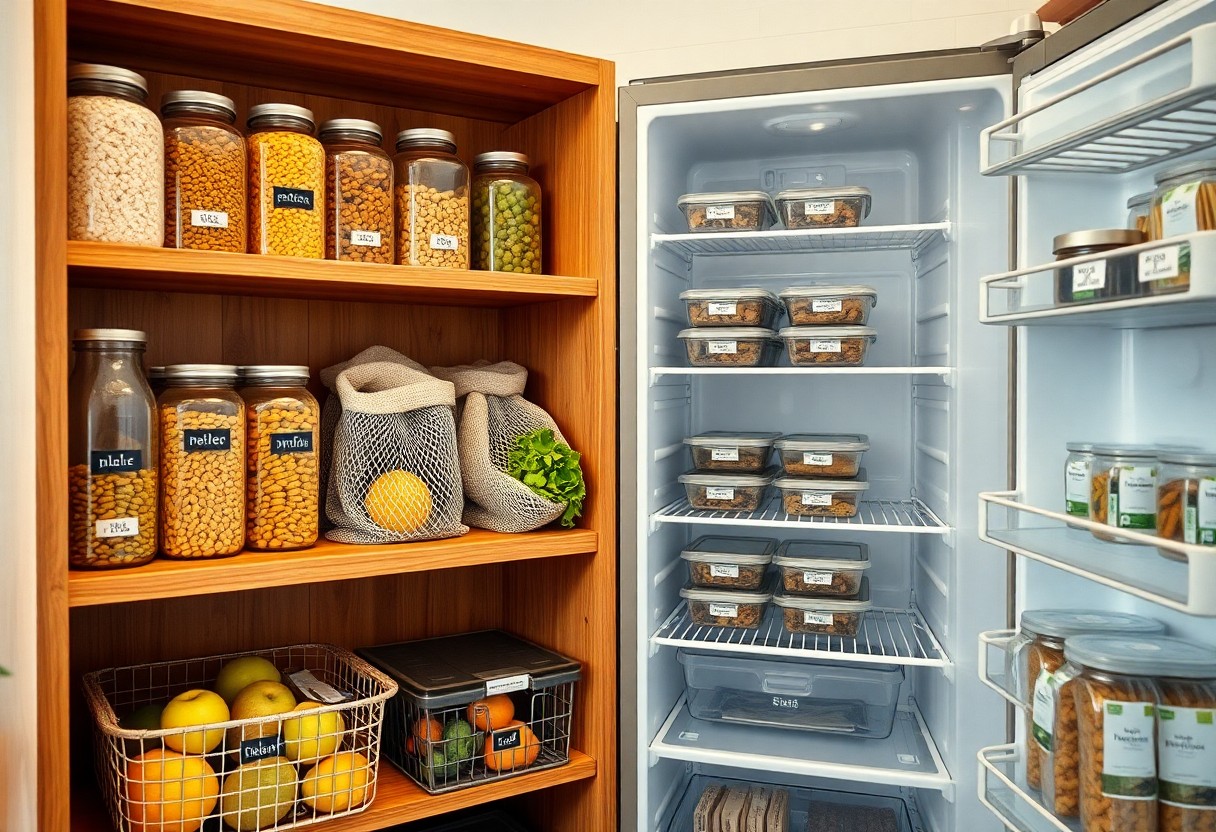
Group items by category-baking, grains, legumes, snacks-so you can scan for expirations; keep everyday staples at eye level and bulk bags on lower shelves. Use clear, stackable containers with consistent labels showing purchase dates to enforce FIFO, and place quick-grab snacks in front for kids to reduce forgotten packages. Store heavy sacks on the floor and use shelf risers or baskets to maximize visibility and reduce hidden waste.
Tips for Maintaining the Shelf Life of Grains and Snacks
Seal grains and snacks in airtight containers or vacuum bags; whole grains typically last 3-6 months at room temperature, extendable to 6-12 months refrigerated and 1-2 years frozen. Store oily items like nuts and granola in the fridge to slow rancidity, and check by smell before use. Label each container with date and rotate stock so older items are used first.
Use glass jars with rubber gaskets for frequent access and Mylar bags with oxygen absorbers for long-term storage; in a small household trial, pre-portioning bulk staples and labeling reduced pantry waste by about 30% over six months. Maintain storage temperatures under 70°F and humidity below 60% to deter pests and mold; for small packets, add silica gel or vacuum seal single-serving portions. If you buy in bulk, freeze portions you won’t use within 2-3 months to preserve quality.
- oxygen absorbers – ideal for Mylar-packed long-term storage of grains and legumes.
- clear labeling – date and contents so you and others follow FIFO.
- portioning – pre-portion bulk into meal-sized or weekly-use bags to limit re-exposure.
- Recognizing storage temperature and humidity limits guides whether to refrigerate or freeze items for best shelf life.
Using Technology to Your Advantage
How-to Utilize Apps for Inventory Management
You can use apps like AnyList or Out of Milk to scan barcodes, log purchases, and set expiry date reminders; syncing between devices keeps everyone updated. Configure notifications 2-3 days before perishables expire, sort items by category (produce, dairy, frozen), and run weekly audits to avoid duplicates. Some apps estimate shelf-life and export lists for donations or meal plans, while automated alerts cut wasted food and save money.
- Inventory tracking
- Barcode scanning
- Expiry reminders
- After shared sync
Tips for Smart Shopping and Meal Planning
You should plan meals around on-sale items and what you already have, build a rotating two-week menu to limit impulse buys, and buy quantities that match your household size-buying bulk perishables meant for large groups often increases spoilage. Use an aisle-organized list to cut shopping time by up to 30% and avoid duplicates; prioritizing frozen or long-life alternatives when appropriate helps stretch groceries. Planned menus reduce waste and save money.
You can batch-cook and freeze portions to extend shelf life-meals kept at -18°C (0°F) remain safe for months; label containers with date and use FIFO (first in, first out). Track what you discard for two weeks to spot patterns, then adjust portion sizes or shopping frequency; swapping one large weekly shop for two smaller ones can lower fresh-produce spoilage. Batch-freezing and FIFO labeling are high-impact tactics.
- Meal batching
- FIFO labeling
- After portion tracking
Creative Solutions for Leftovers
Repurpose cooked proteins, grains and veg into quick new dishes-turn roasted vegetables into a frittata, day-old rice into fried rice, and roast chicken into tacos within 3-4 days of refrigeration; freeze portions for up to 3 months. Use airtight, stackable containers and batch-cook sauces to extend use, and jot dates on lids so you prioritize older items. Assume that you label and rotate containers to cut waste and save money.
- leftovers
- repurpose
- freeze
- labeling
How-to Store and Reheat Leftovers Safely
Cool leftovers within 2 hours and portion into shallow, airtight containers so they chill quickly; keep your fridge at or below 40°F (4°C). Reheat evenly to an internal temperature of 165°F (74°C), stirring to remove cold spots, and avoid reheating more than once-do not refreeze reheated dishes. Assume that you discard refrigerated leftovers after 3-4 days and always check for off smells or textures before eating.
- 2 hours
- 40°F (4°C)
- 165°F (74°C)
- 3-4 days
Tips for Transforming Leftovers into New Meals
Combine proteins with fresh herbs, acids and contrasting textures to revive flavors: add lemon and parsley to chicken, toss cold shrimp into salads, or fold roasted veg into a frittata for breakfast. Stretch grains by making bowls-1 cup cooked rice plus veg, a protein and a dressing can feed more people-and create weekly themes like “Leftover Stir-Fry” to simplify decisions. Assume that keeping basic sauces and spices handy makes reinvention both fast and tasty.
- grain bowls
- leftover reinvention
- frittata
- sauces
Batch small components: simmer bones for 6-8 hours to make broth, freeze stock in ice-cube trays for quick sauces, and portion single-serve meals into freezer-safe containers that last about 2-3 months; this reduces spoilage and speeds weeknight prep. Use clear labeling with date and contents so you use older items first. Assume that a well-organized freezer and a few pantry staples (soy, vinegar, chili paste) multiply your leftover options.
- broth
- freeze
- portion
- pantry staples
Educating Your Household
How-to Get Family Members on Board with Sustainable Practices
You can spark participation by assigning clear, small tasks-one person handles labeling, another tracks leftovers-and running a 14-day meal planning challenge to show quick wins. Use visual cues like a fridge calendar, post savings in dollars or pounds weekly, and celebrate zero-waste meals to keep momentum. Offer a simple reward, such as choosing a weekend activity, to reinforce good habits. Assume that small, visible wins convert skeptics into steady contributors.
Tips for Establishing a Food Waste Reduction Mindset
You should adopt a few measurable habits: follow first-in-first-out storage, check expiry dates every 3-4 days, and prioritize meals using items closest to their use-by dates. Label containers with dates and portion sizes, and freeze extras within 48 hours to prevent spoilage-proper storage can extend shelf life by days or weeks. Assume that committing to two practices will cut your household food waste noticeably within a month.
- first-in-first-out
- expiry checks
- proper storage
Spend five minutes twice weekly on an inventory check to avoid duplicate purchases and plan meals around what’s already on hand; for a family of four this often saves $20-$40 per month. Teach portion control, encourage creative reuse of scraps (soups, stock), and set a visible waste log so trends are obvious. Assume that making these routines visible and quantified turns one-off actions into lasting sustainability habits.
- inventory checks
- portion control
- sustainability
Final Words
Hence you can reduce waste and save money by organizing your pantry, storing perishables at proper temperatures, labeling and rotating items, and planning meals so your grocery buys last; use airtight containers and clear storage to make your choices visible, and consult Practical Ways to Reduce Food Waste at Home and Save … for simple steps you can apply today.
FAQ
Q: How should I store fruits and vegetables to extend freshness and prevent waste?
A: Group produce by ethylene sensitivity-keep ethylene producers (apples, bananas, tomatoes) separate from sensitive items (leafy greens, broccoli). Use your refrigerator’s high- and low-humidity drawers as intended: high humidity for leafy greens and vegetables that wilt, low humidity for fruits. Store berries in a breathable container lined with paper towel and only wash them just before eating; keep salad greens in a sealed container with a dry paper towel to absorb excess moisture. Store root vegetables in a cool, dark place and keep potatoes and onions apart to avoid accelerated spoilage. Keep tomatoes, winter squash, and avocados at room temperature until ripe, then refrigerate if you need to pause ripening.
Q: What are the best practices for storing dairy, meat, and leftovers to maximize safety and reduce waste?
A: Keep your refrigerator at or below 40°F (4°C) and the freezer at 0°F (-18°C). Store raw meat and fish on the lowest shelf in sealed containers to prevent drips. Use airtight containers or heavy-duty freezer bags for leftovers and portioned meals; label with the date and use a first-in, first-out system. Cool hot food quickly-within two hours-before refrigerating, and consume refrigerated leftovers within 3-4 days or freeze for longer storage. Freeze fresh meats, bread, and excess cooked portions in meal-sized portions; use vacuum sealing or remove air to prevent freezer burn. Thaw safely in the refrigerator, under cold running water, or using the microwave for immediate cooking.
Q: How can pantry organization and shopping habits help reduce grocery waste at home?
A: Store dry goods in clear, airtight containers to extend shelf life and make contents visible; keep similar items together and label containers with purchase or opened dates. Practice first-in, first-out by moving newly purchased items to the back. Buy bulk items only in amounts you can use in a reasonable time, and pre-portion larger purchases into meal-sized packages for freezing. Plan meals around what you already have, and make simple lists to avoid impulse buys that go unused. Keep bread in a cool, dry place if you’ll use it within a few days, or freeze slices for longer storage. Regularly check expiry and quality, and treat slightly past-best-by items as candidates for cooking (soups, stews, smoothies) rather than immediate discard.